
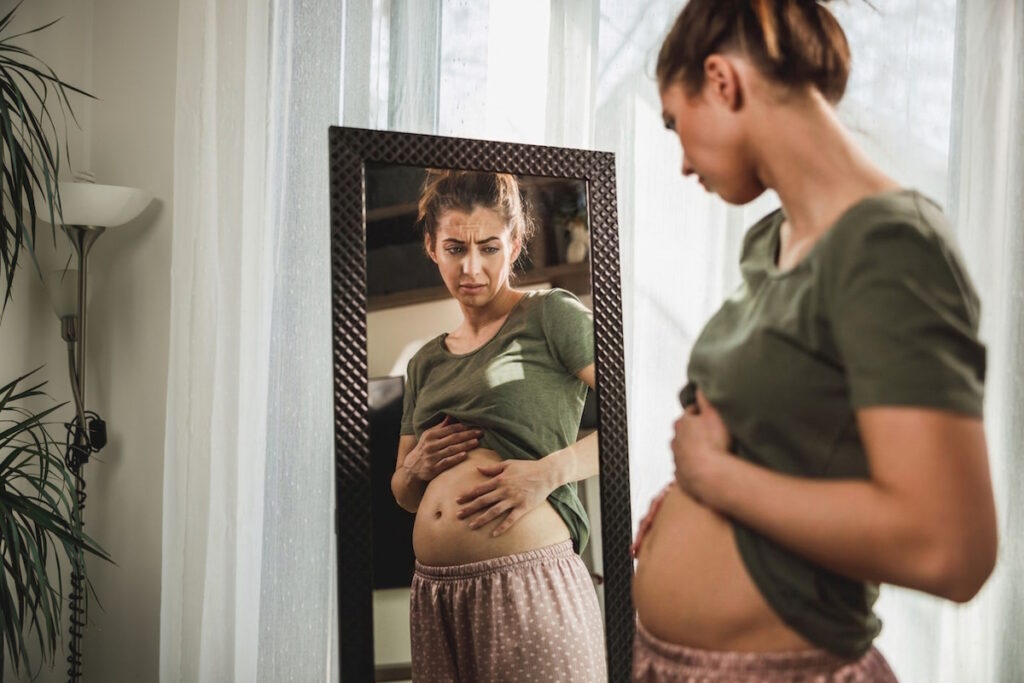
Diane* has not been feeling like herself since she was diagnosed with uterine fibroids months ago. The uncomfortable symptoms, including heavy menstrual bleeding, cramping, and fatigue, come in waves and are about all she can think about on some days. And yet, she does her best to maintain a healthy lifestyle of eating right and exercising. It is one of those things she has always prided herself on, and fibroids be darned, she is going to stick to it. Unfortunately, Diane can’t help but notice that her midsection has been getting larger. It is almost as if her stomach looks pregnant. On top of that, she is doing all the right things health-wise. She visited her doctor and asked the one question she never imagined having to ask: “Can uterine fibroids make your stomach look pregnant?”
The short answer is yes. We know that is the last thing many women want, especially when they maintain healthy lifestyle to keep weight in check and are not expecting a baby. But the reality of fibroids is that weight gain and seemingly unexplained bloating and swelling in the abdomen is possible. If you are experiencing unexpected weight gain or a noticeable stomach bulge reminiscent of being pregnant, it may be time to look at fibroid treatment options, including non-surgical fibroid procedures.
Quick Answer: Yes, uterine fibroids can make your stomach look pregnant. As fibroids grow, they can enlarge the uterus and cause bloating, swelling, and weight gain in the abdomen—even in women who eat well and exercise regularly.
Do These Fibroid Symptoms Sound Familiar?
- Persistent stomach swelling or fullness
- A firm or enlarged lower abdomen that doesn’t improve with diet or exercise
- Abdominal enlargement that seems to increase gradually over time
- Feeling of heaviness in the lower stomach, even when you’re not on your period
- Clothes that feel tighter around the waistline
- People often ask you, “Are you expecting?”
- Bloating that worsens before or during menstruation
- Pelvic pressure or a feeling that something is pushing against your bladder or bowels
- Frequent urination caused by pressure on the bladder
The Not-So Surprising Reason Why Fibroids Make Your Stomach Look Pregnant
As you may know from speaking with your doctor, fibroids are non-cancerous growths that develop from the muscle tissue of the uterus. Research estimates that 171 million women worldwide suffer from fibroids, and most are diagnosed in women between the ages of 35 and 54. However, fibroids can occur in women younger than 35 and until menopause. Not all women experience painful symptoms, such as cramps and pelvic pain. In fact, many women don’t even know they have fibroids until they are detected during a routine exam during their OBGYN appointment. That said, the lack of pain right now might not change the fact that fibroids can impact your body in different ways—such as bloating and added pounds without realizing what is happening.
How does this occur? Not all fibroids stay small. They can grow in clusters and at different rates. Some may stay small, such as the size of a seed or cherry. Others can balloon to the size of a plum or orange. In extreme cases, they can be the size of a small pumpkin.
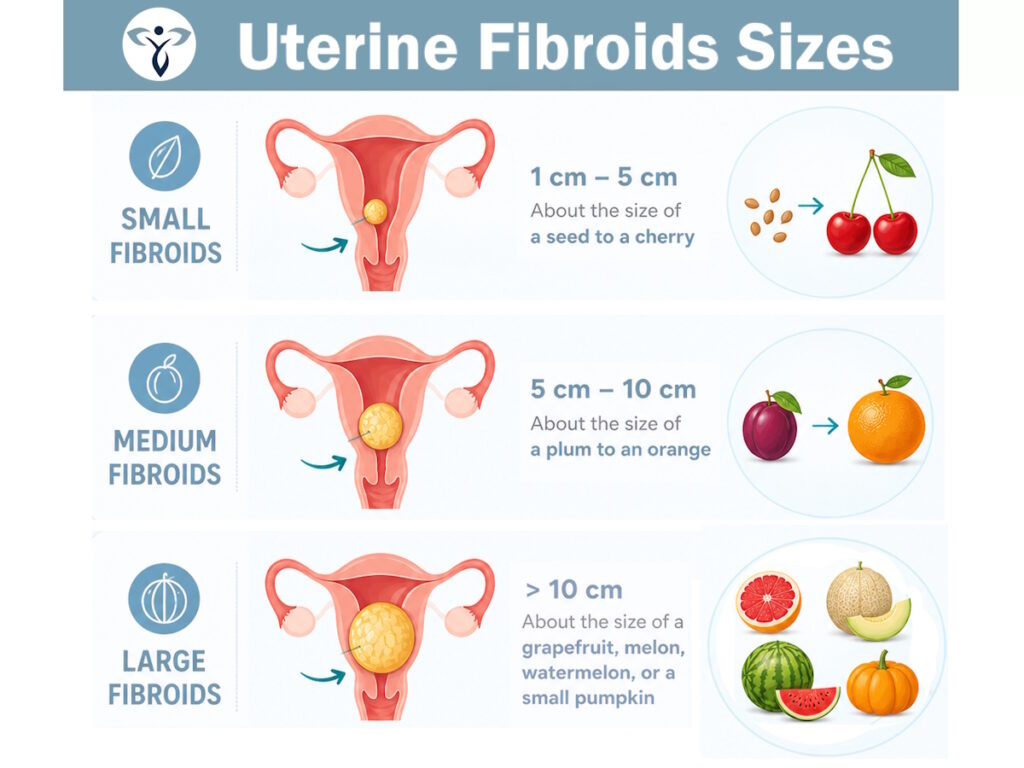
- Small fibroids — Between 1 cm and 5 cm. Basically, the size of a small seed to a cherry.
- Medium fibroids — Between 5 cm and 10 cm. Can be the size of a plum to an orange.
- Large fibroids — Greater than 10 cm. The size of a melon, grapefruit, watermelon, or a small pumpkin.
Fibroids are under hormonal control—specifically, estrogen and progesterone—and tend to grow more rapidly during your reproductive years, when hormone levels are at their highest. We tell you this because a growing fibroid will naturally begin to weigh more. That is a lot of excess weight to be carrying around.
On top of that, clusters of fibroids ultimately press on internal organs, distort the size of your uterus, and create a large, heavy mass where it should not be. This leads to additional symptoms, including that they can make a woman appear pregnant or that she has gained a lot of weight. A 2017 U.S. cross-sectional survey of 3,031 women with diagnosed uterine fibroids found that 63.3% reported constipation, bloating, or diarrhea at some point. And unlike dietary bloating, this swelling persists regardless of what you eat or how much you exercise.
A 2017 U.S. cross-sectional survey of 3,031 women with diagnosed uterine fibroids found that 63.3% reported constipation, bloating, or diarrhea at some point. And unlike dietary bloating, this swelling persists regardless of what you eat or how much you exercise.
Your Stomach Looking Pregnant Might Not Be Tied to Fibroid Growth Alone
The link between fibroids and weight gain is about more than growth. One fibroid symptom is heavy or prolonged periods. When this happens, a woman can develop anemia, a common blood disorder that affects more than 3 million Americans. Having anemia can make you feel tired and weak, leading many women to scale back on exercising and instead sit on the couch or in bed and eat more.
This, too, leads to weight gain and the possibility of your stomach looking pregnant.
Therein lies the question: do large fibroids need to be removed? The answer to that is simple: any size fibroid that is causing pain or body changes, such as bloating, swelling, abdominal pressure, and a “pregnant look,” needs to be evaluated by someone who knows fibroids and can guide you on potential next steps. If steps are needed, you will have a choice between fibroid removal and treatment.
Fibroid removal is accomplished through bloody, invasive procedures such as hysterectomy and myomectomy. Non-surgical treatment options like UFE cut off the blood supply to the fibroid, causing it to shrink and die.
In either case, removing the fibroid or cutting off its blood supply can resolve abdominal swelling and weight gain.
UFE Is One of the Non-Surgical Fibroid Treatment Options
While there are many treatment options for women with fibroids, our team at the Fibroid Institute wholeheartedly believes in the benefits of uterine fibroid embolization. UFE is a unique procedure because it treats fibroids without requiring painful surgery or a lengthy recovery. Instead, UFE uses radiology and tiny catheters to cut off the blood supply to your fibroids in a minimally invasive way. Your fibroids need a blood supply to stay alive and grow. Removing that element effectively causes them to shrink and die.
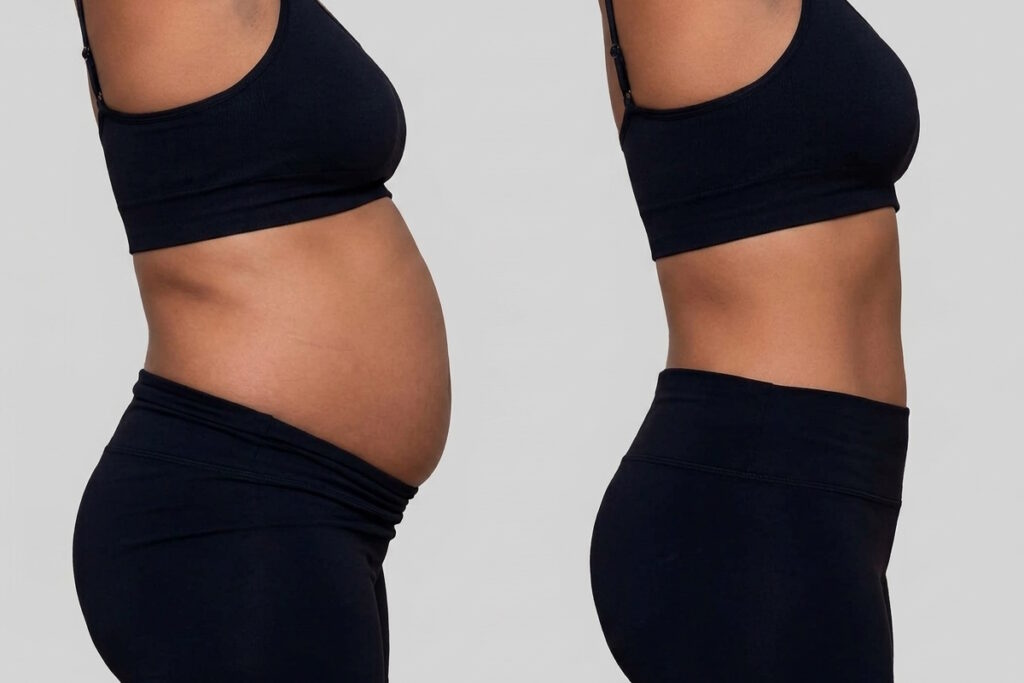
As a result, your uterus will stabilize and shrink back to its normal size, and your stomach that looks pregnant will be a thing of the past.
Just a few additional benefits of UFE at the Fibroid Institute include:
- Covered by most medical insurance
- No hospital stay
- Tiny wrist puncture, no need for vaginal access
- Short period of recovery
- Treat multiple fibroids at once
- Patients get direct access to their doctor’s mobile number
- Over 90% effective in reducing symptoms
- All providers are fibroid experts and UFE specialists
The bottom line is that women have more options than ever, and fibroid treatment doesn’t have to be invasive. In fact, more women than ever are opting to forego bloody surgical options such as hysterectomy and myomectomy by choosing UFE. By opting for a minimally invasive approach, a woman who fears fibroid surgery or isn’t a candidate can avoid all of that and still achieve highly successful results.
In cases where surgery is unavoidable, UFE can help prepare a patient for a hysterectomy or myomectomy and make those surgeries easier for both the patient and surgeon by reducing blood loss and allowing a less invasive approach.

Frequently Asked Questions (FAQs) About Fibroids and Stomach Swelling
Fibroid Institute Offers Innovative Fibroid Treatment
It is overwhelming enough to know that you have been diagnosed with fibroids. It is potentially even worse when you are doing all the right things (eating right, exercising, avoiding dairy and stress, etc.), and still can’t shake the stomach bulge or bloating that makes you look pregnant. The good news is that you don’t have to live with these uncomfortable symptoms forever. If you are experiencing unexpected weight gain or a noticeable stomach bulge reminiscent of being pregnant, it may be time to look at treatment options, including non-surgical options such as uterine fibroid embolization.
Whether UFE is the right option for you, our team of fibroid doctors is on hand to partner with you and your PCP or OBGYN to determine the best course of action. In addition, we simplify your UFE journey by managing everything from insurance to PCP communication, while providing all patients with direct access to their fibroid doctor before and after their procedure. Our physicians are board-certified interventional radiologists and experts passionate about helping women become #FibroidFree. The bottom line is that you do not have to worry about the ongoing challenges of missing work and life events with UFE as your fibroid treatment.
At the Fibroid Institute, we do not believe you need to decide between suffering in silence and having invasive surgery. With multiple locations, our fibroid clinics help thousands of women avoid fibroid surgery and find relief from their fibroid symptoms. Meet some of these women here:
Request a free 10-15-minute phone screening to determine if you are eligible. If you qualify for UFE after the screening, you can schedule your on-site or telehealth consultation. Most major medical insurance providers cover the cost of UFE.
Get started now by calling our Dallas, Texas clinics at 214-838-6440, Houston, Texas clinics at 713-903-3733, South Carolina clinics at 843-628-4290 or complete the form below.
"*" indicates required fields
This information is not a substitute for professional medical advice. Before starting any new treatment or if you have questions about a medical condition, always seek the advice of your doctor or other qualified health provider.
The Fibroid Institute serves the Charleston, South Carolina, Dallas/Fort Worth, Texas and Greater Houston, Texas metro areas including Addison, Allen, Arlington, Bedford, Bellaire, Carrollton, Cedar Hill, Charleston, Clear Lake, Cockrell Hill, Conroe, Craig Ranch, Cypress, Dallas, DeSoto, Duncanville, Euless, Fort Worth, Frisco, Garland, Grand Prairie, Highland Park, Houston, Hurst, Hutchins, Irving, Katy, Kingwood, Lancaster, League City, McKinney, Mesquite, Mt. Pleasant, Murrells Inlet, Orangeburg, Park Cities, Plano, Richardson, Sherman, Spring, Stafford, Sugar Land, Summerville, Texas City, The Woodlands, Universal City, University Park, Walterboro, Webster and more.
*Patient names and/or photos may be changed to protect patient confidentiality.
Medically reviewed by board-certified interventional radiologists Dr. Fischer, Dr. Shaw and Dr. Slonim, August 13, 2026
