

Bethany* has never been the type to complain. Even during occasional bouts with the flu or a cold, she rarely said anything—even to those closest to her. Instead, she simply laid low for a few days, took plenty of meds, and rode it out quietly. But even Bethany could not ignore her latest health concern. It started with heavy periods, which she first assumed was one of those things women simply must deal with. However, she started thinking otherwise when heavy flow was followed by intense pelvic pain, bloating, and back pain. Everything hit at once, and after months of frequent bathroom trips and fatigue from excessive bleeding, she finally scheduled an appointment with her doctor. An ultrasound revealed multiple uterine fibroids—including two the size of a watermelon. Clearly, she knew this was not something she to “ride out.” Plus, those two big ones scared her the most. She even stopped her doctor mid-sentence and asked, “How dangerous is something that size? I mean … what size fibroid is dangerous?”
Women experiencing fibroids for the first time understandably have many questions when it comes to their diagnosis. And while most want relief from all their symptoms and every fibroid causing them, it is common for their attention to shift toward the largest of these non-cancerous growths. After all, hearing your doctor say you have a fibroid the size of an orange, grapefruit, or even a watermelon can sound scary. It is also natural to assume the larger the fibroid is, the more dangerous it can be if left untreated.
We are not going to say that size doesn’t matter when it comes to fibroids. It certainly does. In fact, larger fibroids are far more likely to create noticeable symptoms because of how much more pressure they place on nearby organs and tissue. They do need to be treated. That said, size alone does not always determine how concerning a fibroid may be. Their growth rate and location, in addition to size, can turn mild gynecological problems into life-interrupting symptoms.
Quick Answer: A fibroid is generally considered large once it exceeds 10 centimeters—roughly grapefruit-sized or bigger. Size alone isn’t the only factor; growth rate and location matter too. Even so, fibroids over 5 cm are more likely to cause heavy bleeding, anemia, pelvic pressure, and fertility complications, which is why doctors monitor them closely.
Are You Experiencing These Symptoms of Large Fibroids?
- Heavy menstrual bleeding
- Debilitating cramps, pelvic pain, and pressure
- Periods that last longer than a week
- Pain during sex
- Back or leg pain
- Urinary frequency
- Excessive fatigue
- Weight gain or bloating and swelling in the lower abdomen
- Constipation, diarrhea, or rectal discomfort
How Concerned Do You Need to Be About Fibroid Size?
Fibroids are non-cancerous growths that develop from the muscle tissue of the uterus. Depending on your situation, you may have one or several. But that does not mean they are all the same. Some may not cause any symptoms. Others may be a direct cause of how you are feeling. They can also differ in size and grow at different rates. The ones that continue to grow are the most alarming for women and can commonly speculated to be “dangerous.”
So, what is considered a large fibroid? Honestly, any uterine fibroid that is over 10 centimeters. Size categories of fibroids include the following:
- Small Fibroids — Between 1 cm and 5 cm. Basically, the size of a small seed to a cherry.
- Medium Fibroids — Between 5 cm and 10 cm. Can be the size of a lime or lemon to an orange.
- Large Fibroids — Fibroids are considered large if they exceed 10 cm. Many women and their doctors compare their size to that of a mango, grapefruit, watermelon, or even a small pumpkin.
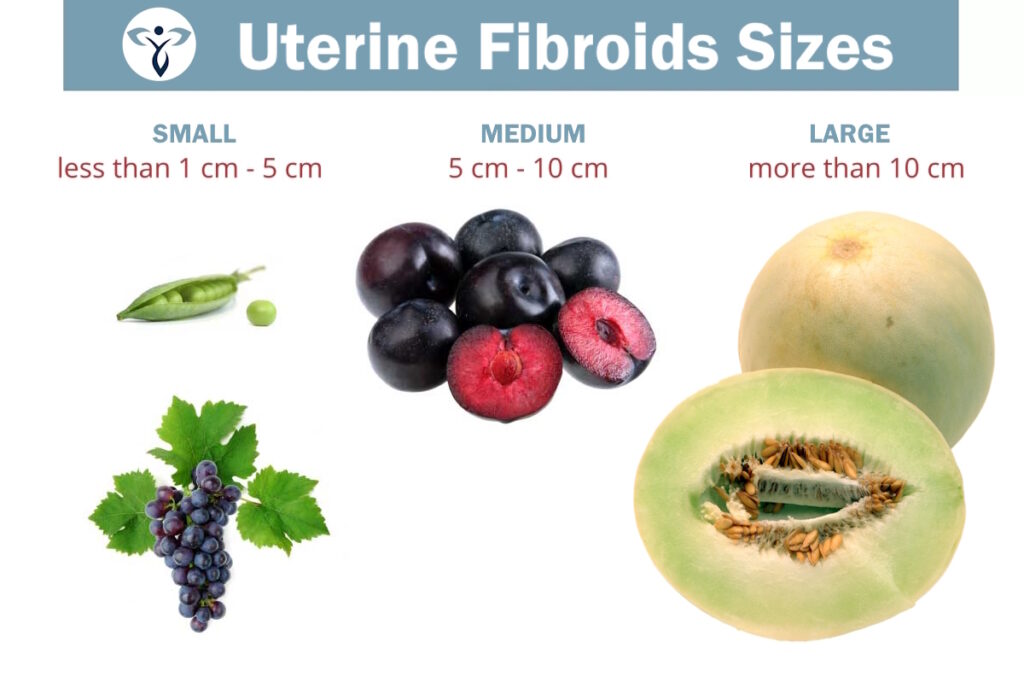
While not necessarily any more “dangerous” than a pea-size fibroid, once fibroids grow beyond 10 centimeters, they are far more likely to cause complications beyond the typical fibroid symptoms.
For instance, let’s say you have a fibroid the size of a mango located just outside the uterine wall. Due to its size and location, it will likely begin pressing directly against your bladder or bowels. That increase in pressure could mean several things: you may find yourself running to the bathroom more often than normal. Some women may experience that, as well as persistent digestive discomfort, rectal pressure, and even constipation.
As another example, let’s say you have a fibroid the size of a watermelon growing alongside the back side of the uterus. Because of the size alone, a woman in this situation would experience everything from unexplained weight gain to pelvic heaviness and lower back pain as the fibroid presses against the lower spine and pelvic nerves.
Heavy bleeding can also become far more concerning with large fibroids because it can contribute to anemia, which can leave women feeling exhausted, weak, short of breath, or mentally drained. Some women become so accustomed to their symptoms that they do not realize how severely fibroids are affecting their overall health until treatment finally brings relief. Beyond telltale fibroid symptoms, even daily tasks can be directly impacted:
- Exercising
- Having sex
- Bending over
- Sitting or standing for long periods
- Sleeping comfortably

Fibroids affect roughly 75% of women of reproductive age, and about 30% of those patients develop menorrhagia (heavy menstrual bleeding)—with more than half of all fibroid patients experiencing symptoms such as heavy bleeding, pelvic pain, or infertility.
What Size Fibroid Is Dangerous for Fertility or Pregnancy?
Fibroids of any size or location could interfere with your ability to get pregnant or enjoy a healthy existing pregnancy. This is not the case for all women—many with asymptomatic fibroids still have healthy pregnancies. That said, larger fibroids can do any of the following:
- Distort the uterus — Some fibroids are large enough or in the perfect position to change the size and shape of the uterus, especially if left untreated and allowed to continue growing.
- Block parts of the reproductive tract — If this happens, it can affect your ability to get pregnant and increase the risk of miscarriage, preterm labor, breech positioning, or cesarean delivery.
- Complicated pregnancy monitoring — While you may not be experiencing uncomfortable symptoms yet, larger fibroids can make it more challenging for doctors to monitor fetal positioning. Large fibroids can also prevent a baby from moving into the ideal delivery position.
Many doctors pay especially close attention to fibroids larger than 5 to 10 centimeters, particularly if symptoms are worsening or if the patient is pregnant or considering future pregnancies.
Fibroids larger than 5 cm in diameter are more likely to cause obstetric complications and are associated with higher cesarean delivery rates, leading researchers to recommend pre-conception myomectomy for women with large fibroids.
What Size Fibroid Is Dangerous for Removal or Treatment?
The good news is that uterine fibroids are treatable. Also, women have more options than ever when it comes to fibroid removal and fibroid treatment. That said, not all treatment options work for certain fibroids—particularly larger fibroids. This is where uterine fibroid embolization (UFE) is different.
UFE can treat any fibroid, regardless of type, size, or location. It is a revolutionary, advanced procedure that has become the gold standard for non-surgical fibroid treatment. Why? For starters, since it is not a surgical procedure, you can go home the same day. Also, rather than removing fibroids with numerous incisions, UFE cuts off blood flow to all fibroids. UFE is low risk, has no incision, is faster than other options, and is one of the most reliable ways to treat fibroids. So, how exactly does it work?
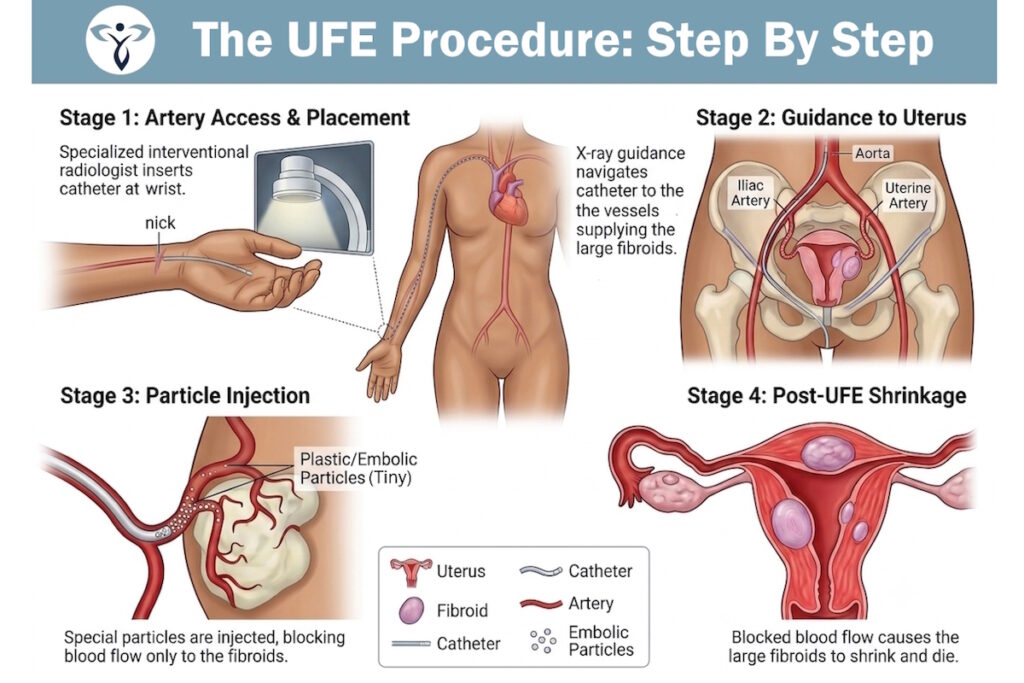
UFE starts by a specialized interventional radiologist from our expert fibroid team making a tiny nick on your left wrist. A very small catheter is inserted through this into your artery, and our fibroid doctors use X-ray guidance to locate the vessels that supply blood to your large fibroids. Tiny particles are injected into the vessels, blocking blood flow to the fibroids and causing them to shrink and die. So, while it is possible that a decent-sized mass may remain after UFE, symptom relief does not depend on volume reduction. It depends on whether the fibroid can no longer exert pressure on surrounding structures.
Advantages of having your UFE procedure at the Fibroid Institute include:
- Covered by most major medical insurance
- You can come to us directly, referrals not required
- No hospital stay
- Treat multiple fibroids at once
- No incision or vaginal access, just a small puncture on your wrist
- Recovery period is as little as one week in many cases
- Our patients receive their doctor’s mobile number
- Over 90% effective in reducing symptoms
In the Ontario Uterine Fibroid Embolization Trial, patients reported significant improvement in menorrhagia (83%), painful periods (77%), and urinary frequency/urgency (86%) after UFE, with 91% overall satisfaction.
The bottom line is that women have more options than ever, and fibroid treatment does not have to be invasive. In fact, more women than ever are opting to forego bloody surgical options such as hysterectomy and myomectomy by choosing UFE. By opting for a minimally invasive approach, a woman who fears fibroid surgery or is not a candidate for surgery can avoid all of that and still achieve highly successful results.
In cases where surgery is unavoidable, UFE can help prepare a patient for a hysterectomy or myomectomy and make those surgeries easier for both the patient and surgeon by reducing blood loss and fostering a less invasive approach.
Frequently Asked Questions (FAQs) About Large Fibroids
Fibroid Institute Is Your Source for Treatment of Uterine Fibroids
If you have been diagnosed with uterine fibroids and are worried about what size fibroid is dangerous, a comprehensive evaluation can help determine which treatment is most likely to relieve symptoms while aligning with your health goals and lifestyle. These are the in-depth conversations you will want to have with your primary care physician or gynecologist. Whether UFE is the right option for you, our team of fibroid doctors is always on hand to partner with you and your PCP or OBGYN, as well as provide a second opinion, to determine the best course of action.

If uterine fibroid embolization (UFE) is your preferred option, the only decision left is to select the right interventional radiologist for your care. Beyond the procedure itself, women want an experienced fibroid doctor who provides access, communication, comfort, innovation, trust, and a supportive experience from start to finish. The Fibroid Institute is here to offer you just that.
In addition, we simplify your UFE journey by managing everything from insurance to PCP communication, while providing all patients with direct access to their fibroid doctor before and after their procedure. Our physicians are board-certified interventional radiologists and experts passionate about helping women become #FibroidFree. The bottom line is that you do not have to worry about the ongoing challenges of missing work and life events with UFE as your fibroid treatment.
Request a free 10-15-minute phone screening to determine if you are eligible. If you qualify for UFE after the screening, you can schedule your on-site or telehealth consultation. Most major medical insurance providers cover the cost of UFE. Get started now by calling our Dallas, Texas clinics at 214-838-6440, Houston, Texas clinics at 713-903-3733, South Carolina clinics at 843-628-4290 or complete the form below.
"*" indicates required fields
Before starting any new treatment or if you have questions about a medical condition, always seek the advice of your doctor or other qualified health provider. This information is not a substitute for professional medical advice.
The Fibroid Institute serves the Charleston, South Carolina, Dallas/Fort Worth, Texas and Greater Houston, Texas metro areas including Addison, Allen, Arlington, Bedford, Bellaire, Carrollton, Cedar Hill, Charleston, Clear Lake, Cockrell Hill, Conroe, Craig Ranch, Cypress, Dallas, DeSoto, Duncanville, Euless, Fort Worth, Frisco, Garland, Grand Prairie, Highland Park, Houston, Hurst, Hutchins, Irving, Katy, Kingwood, Lancaster, League City, McKinney, Mesquite, Mt. Pleasant, Murrells Inlet, Orangeburg, Park Cities, Plano, Richardson, Sherman, Spring, Stafford, Sugar Land, Summerville, Texas City, The Woodlands, Universal City, University Park, Walterboro, Webster and more.
*Patient names and/or photos may be changed to protect patient confidentiality.
Medically reviewed by board-certified interventional radiologists Dr. Fischer, Dr. Shaw and Dr. Slonim, August 25, 2026
