

Quick Answer: Yes, uterine fibroids can cause pain during sex (dyspareunia), especially when they’re large, located near the cervix, or growing into the uterine cavity. Treating the underlying fibroids—through options like uterine fibroid embolization (UFE)—often relieves this pain and helps restore comfort during intimacy.
Amy* and her partner have been married for 14 years, and in that time, they have never had problems with their sex life. Intimacy has always come naturally to them and has been an enjoyable part of their relationship. But since being diagnosed with uterine fibroids a little more than a year ago, Amy has found herself shying away from intercourse. In a word, it hurts—not just physically with the act itself, including pelvic pressure, bleeding afterward, and reduced sexual enjoyment, but also the realization that she and her partner are losing touch with that special and necessary part of their relationship. At first, Amy could not imagine working up the courage to talk to her doctor about uterine fibroids and sex. To her, it was embarrassing. But the longer she avoided the conversation, the more her relationship, confidence, body image, and self-worth suffered.
If this situation sounds familiar, you are not alone. According to The Office on Women’s Health, 70 to 80% of women develop fibroids by the time they reach 50. While many never develop symptoms, women with symptomatic fibroids often report that the condition affects far more than their physical health. Recent research shows that fibroids can negatively impact quality of life, emotional well-being, body image, intimate relationships, and sexual function.
While some are unaware they have them, others experience symptoms that make sex life painful and even impossible. In one study, 23.5% of women with fibroids reported painful sex compared to 9.1% without the diagnosis. The key is to look into treatment options right away. Current guidance from the American College of Obstetricians and Gynecologists (ACOG) recommends that women with symptomatic fibroids discuss individualized treatment options with their healthcare provider based on their symptoms, treatment goals, and plans for future fertility.
In one study, 23.5% of women with fibroids reported painful sex compared to 9.1% without the diagnosis.
If you have been diagnosed with uterine fibroids, the idea of having sex may not be as appealing to you as it once was. Yes, it can hurt—through no fault of yours or your partner’s. You may also notice your desire waning. Eventually, you may avoid the act altogether and wonder how the combination of uterine fibroids and sex life can co-exist long-term. The good news is that they can—but not if painful symptoms remain untreated. Addressing the underlying cause can help relieve discomfort and allow you to enjoy intimacy again.
Are These Fibroid Symptoms Interfering With Your Sex Life?
- Decreased sex drive (libido)
- Pain during or after sex
- Bleeding after sex
- Periods that last longer than usual
- Vaginal dryness
- Pelvic pain or pressure
- Difficulty urinating or needing to urinate more often
- Hormonal imbalances
- Fatigue
- Low self-esteem/body image issues
Uterine Fibroids and Sex: Why Does Sex Hurt?
Fibroids are non-cancerous growths that develop from the muscle tissue of the uterus. They can develop inside, outside, and within the uterine walls. Depending on your situation, you may have one or several at varying sizes. While doctors can sometimes feel a fibroid with their fingers during a routine pelvic exam, you and your partner cannot. In fact, your partner may find it difficult to understand what you are going through.
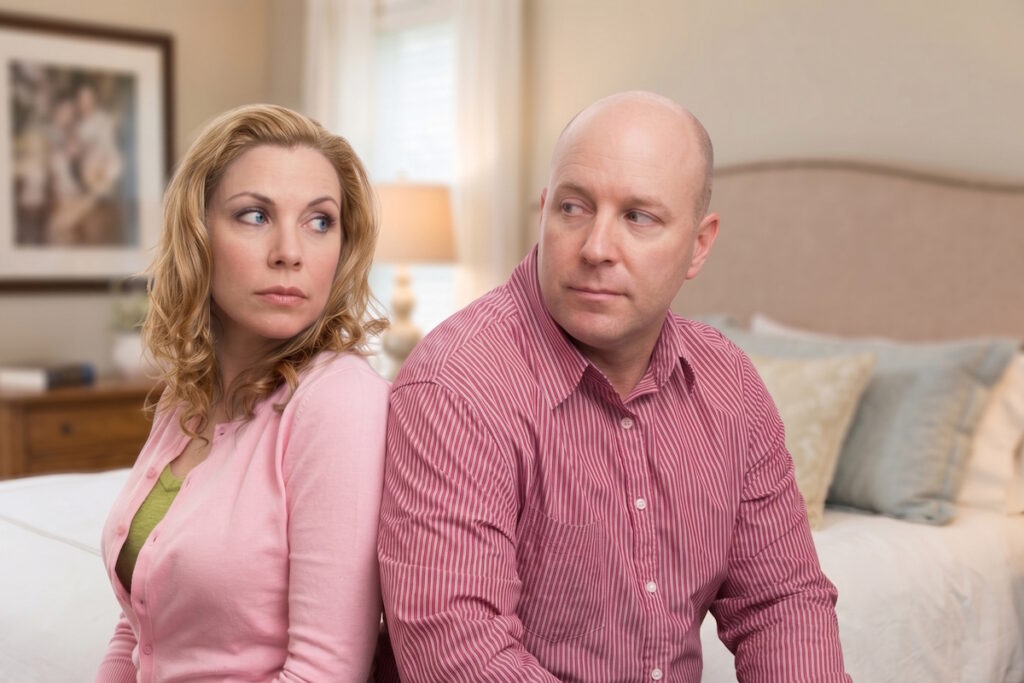
What some women with fibroids experience is a wide range of symptoms—both physical and emotional.
Naturally, everyone is curious initially about the physical symptoms. If a woman is experiencing pain during sex, it is often because of where the fibroids are located. During intercourse, penetration and deep pelvic movement can put pressure on specific fibroids or stretch surrounding tissues, thus triggering pain, cramping, or a feeling of pressure—a condition medically known as dyspareunia. Additionally, the mere anticipation of pain over time can also cause the pelvic floor muscles to tighten, making intimacy even more uncomfortable. Fibroid location is historically broken down into four main areas of the uterus:
- Intramural fibroids — Grow inside the muscles of the uterine wall, causing issues with uterine function. Accounting for 70% of uterine fibroids, this is the most common, affecting one in four of all women of childbearing age.
- Submucosal fibroids — Protrude underneath the uterine lining and into the uterine cavity. Some women notice heavy bleeding during menstruation and increased abdominal pain from this type of fibroid.
- Subserosal fibroids — Tend to grow just outside the uterine walls, impacting surrounding organs. As a result, these can put pressure on the bladder, bowels, and abdomen.
- Pedunculated fibroids — Hang by a thin thread or stalk inside or outside the uterus. These are more likely to cause abdominal pain due to obstruction of the uterus and surrounding organs.
In addition to location, the size of these individual fibroids also may cause issues. While many fibroids remain small and hard to locate, a far greater number of them can become quite large—some as large as a melon. Combined with where those large fibroids are located, they can place extreme pressure on the uterus and cause pain at the point of penetration and deep in the vagina, especially if any grow close to the cervix.
It is important to mention here that not every woman experiences these symptoms. But if you do, or if you bleed during sex, the severity often depends on the size, number, and location of the fibroids.
If you are also wondering if fibroids can affect libido, the answer is yes. Fibroids are under hormonal control—specifically, estrogen and progesterone. Fibroids tend to grow faster during the reproductive years when hormone levels are at their highest. If you have an excessive amount of estrogen, this can cause a decrease in your sex drive.
The Emotional Toll of Uterine Fibroids and Sex Is Discussed Even Less
Another factor to consider is how uterine fibroids and sex impact you emotionally. Having a healthy body image and high self-esteem means you feel comfortable with your body and feel good about your femininity and intimate relationships. The National Institute of Health says that in addition to the physical symptoms associated with painful fibroids and their impact on a woman’s sex life, women are also impacted emotionally, including increased fears about their health, along with additional considerations such as:
- Body image — Fibroids can cause bloating and an enlarged abdomen. This leads many women to feel less attractive and go through prolonged periods of low self-esteem over their appearance. They will likely feel uncomfortable showing their body during times of intimacy, even with partners they have been with for many years.
- Loss of control/feelings of hopelessness — Women who are initially diagnosed and experiencing painful symptoms, including during sex, often do not understand what is going on and feel like they have lost control of their bodies. This can be because of uncontrollable weight gain or not being able to manage their painful symptoms effectively. Beyond the physical pain, these worries interfere with their ability to be intimate.
- Sexual function — Some women find that sexual encounters with their partner are not painful and even enjoyable. In other instances, it may be the complete opposite. As a result, this unpredictability in sexual relations can create concerns over sexual function and how their bodies and relationships will be impacted long-term.
- Relationships — Being open and honest about a sensitive topic, such as uterine fibroids and sex, is not easy. Along with body image issues, a woman may feel nervous even talking about it and establishing her needs with her partner out of fear that it will further strain the relationship.
- Sexual unpredictability — To piggyback on number three, sometimes, sex is good, and other times, it is not. Because of this unpredictability, it can be emotionally difficult for women to understand how their bodies and relationships will be impacted in the long term.

Many women hesitate to talk about these emotional issues with their partners, friends, family, and even their healthcare providers. In many instances, it is because they are embarrassed and feel “less than.” On top of that, many women assume uterine fibroids and sex issues are simply a normal part of aging, a temporary inconvenience, or something they should quietly endure.
Others worry they will feel embarrassed or that their concerns won’t be taken seriously. The truth is that painful intercourse is common, but it is never something you must accept as your “new normal.”
Uterine fibroids are one possible cause of painful sex, but they are not the only one. Conditions such as endometriosis, pelvic floor dysfunction, vaginal dryness, infections, and hormonal changes can also contribute to discomfort during intimacy. That’s why it is important to speak with your healthcare provider if sex has become painful. An accurate diagnosis is the first step toward finding relief.
For women whose symptoms are caused by fibroids, treatment can often improve much more than pelvic pain or heavy bleeding. By relieving pressure on the uterus and surrounding organs, many women experience greater comfort during intercourse, renewed confidence, and a healthier relationship with intimacy. While every woman’s experience is different, addressing fibroids may also help reduce the emotional strain, anxiety, and relationship challenges that often accompany chronic pain.
Uterine Fibroids and Sex: UFE May Be the Option for You
If uterine fibroids and sex with your partner are not seeing eye-to-eye, there is an effective and minimally invasive treatment option called uterine fibroid embolization (UFE). UFE does not technically remove fibroids in the way surgery does. However, it effectively cuts off blood flow to all fibroids, causing them to shrink and die.
It would be irresponsible to guarantee or even imply that your sex life will be better than it was before fibroids as a result of undergoing any fibroid treatment—including UFE. With that said, it is the fibroids no longer causing symptoms that can potentially return your sex life to what it was before fibroids caused the interruption. The goal of the UFE procedure is to cut off blood flow to all fibroids, causing them to shrink and die. As they shrink and die, you no longer have symptoms, which can, in turn, help all areas of life—emotional and physical.
During UFE, a fibroid doctor, known as an interventional radiologist, inserts a small catheter into the radial artery at the wrist. They use X-ray guidance to locate the vessels that supply blood to your fibroids, then inject small particles into the vessels to block the blood flow to the fibroids. You have less pain and quicker recovery time than surgery, all while reducing your fibroid symptoms.
Just a few advantages of UFE at the Fibroid Institute include:
- No hospital stay
- Shorter recovery period (one week in some cases)
- No scarring
- All fibroids may be treated at the same time
- Dramatic reduction in fibroid symptoms
- The uterus is spared
- Covered by most major medical insurance companies
- All providers are fibroid experts and UFE specialists
- 24/7 access to physicians during treatment
At the Fibroid Institute, we consistently hold open, therapeutic conversations with our patients before, during, and after UFE treatment. There are also active online forums where women who have successfully undergone UFE share their stories and how their sex life has been impacted.

Would you like to read the experiences of our patients regarding sex life and fibroids? Read Debbie’s story about intimacy after UFE
Frequently Asked Questions (FAQs) About Fibroids and Sex
Rid Yourself of Uterine Fibroids and Reclaim Your Sex Life
For many women, the pain of uterine fibroids can be so severe that it directly affects their ability to have sexual intercourse pain-free. Naturally, this can lead to libido and self-esteem issues. Suffering through is not something that’s simply part of being a woman. There is an answer, and it doesn’t always involve bloody surgical procedures. At the Fibroid Institute, we are dedicated to helping you become #FibroidFree. Our physicians are interventional radiologists specializing in UFE (uterine fibroid embolization), a non-surgical procedure that causes fibroid tumors to shrink.
Women experiencing heavy periods, pelvic pressure, bulk symptoms, anemia, or rapidly growing fibroids may be candidates for UFE. Determining eligibility depends on factors including fibroid size and location, symptom severity, future fertility goals, and overall health. Whether uterine fibroid embolization is the right option for you our team of fibroid doctors is always on hand to partner with you and your PCP or OBGYN to determine the best course of action.
At the Fibroid Institute, we set the standard of care for advanced fibroid treatment and help women achieve a symptom-free life, able to return to the activities they enjoy. Our experts are among the top specialists for uterine fibroid treatment. We help women who are experiencing painful fibroid issues get back to the lives they were meant to live.
Most major medical insurance providers cover the cost of UFE. Request a free 10-15-minute phone screening to determine if you are eligible. If you qualify for UFE after the screening, you can schedule your on-site or telehealth consultation. Get started now by calling our Dallas, Texas clinics at 214-838-6440, Houston, Texas clinics at 713-903-3733, South Carolina clinics at 843-628-4290 or complete the form below.
"*" indicates required fields
The Fibroid Institute serves the Charleston, South Carolina, Dallas/Fort Worth, Texas and Greater Houston, Texas metro areas including Addison, Allen, Arlington, Bedford, Bellaire, Carrollton, Cedar Hill, Charleston, Clear Lake, Cockrell Hill, Conroe, Craig Ranch, Cypress, Dallas, DeSoto, Duncanville, Euless, Fort Worth, Frisco, Garland, Grand Prairie, Highland Park, Houston, Hurst, Hutchins, Irving, Katy, Kingwood, Lancaster, League City, McKinney, Mesquite, Mt. Pleasant, Murrells Inlet, Orangeburg, Park Cities, Plano, Richardson, Sherman, Spring, Stafford, Sugar Land, Summerville, Texas City, The Woodlands, Universal City, University Park, Walterboro, Webster and more.
This information is not a substitute for professional medical advice. Prior to starting any new treatment or if you have questions regarding a medical condition, always seek the advice of your doctor or other qualified health provider.
*Patient names and/or photos may be changed to protect patient confidentiality.
Medically reviewed by board-certified interventional radiologists Dr. Fischer, Dr. Shaw and Dr. Slonim, September 2026
