

Chantel* knew she had uterine fibroids, and on many days, the symptoms were all she could think about. And yet, she kept putting off fibroid treatment. At first, she tried to ignore them, dismissing them as nothing more than an uncomfortable reality of having monthly periods. When the pain worsened, she leaned more heavily on over-the-counter pain medication and avoided activities that seemed to make things worse. Many days, she found a way to push through. Other days, she stayed in bed. After about a year of this vicious cycle, what used to be “controllable” symptoms escalated into emergency fibroid symptoms—severe pelvic pain, uncontrollable bleeding, and dizziness—and her husband rushed her to the local ER in the middle of the night.
Could this have been avoided? Maybe. Maybe not. Every woman’s fibroid journey is different, and there is no way to predict exactly how symptoms will progress or when they may become as serious as Chantel’s. That said, many ER visits for emergency fibroid symptoms like severe anemia, heavy bleeding, and suddenly worsening pain may be prevented with proactive symptom management, regular monitoring, and timely fibroid treatment. In other words, seek help sooner, and you can address symptoms before they escalate to the point that emergency care is necessary.
Quick Answer: Many fibroid-related ER visits can be avoided by treating symptoms early instead of waiting until they become unmanageable. Track your bleeding and pain, keep regular appointments with your doctor or OBGYN, speak up when symptoms change, and explore treatment options such as uterine fibroid embolization (UFE) before heavy bleeding, anemia, or severe pain reach a crisis point.
Do These Emergency Fibroid Symptoms Sound Familiar?
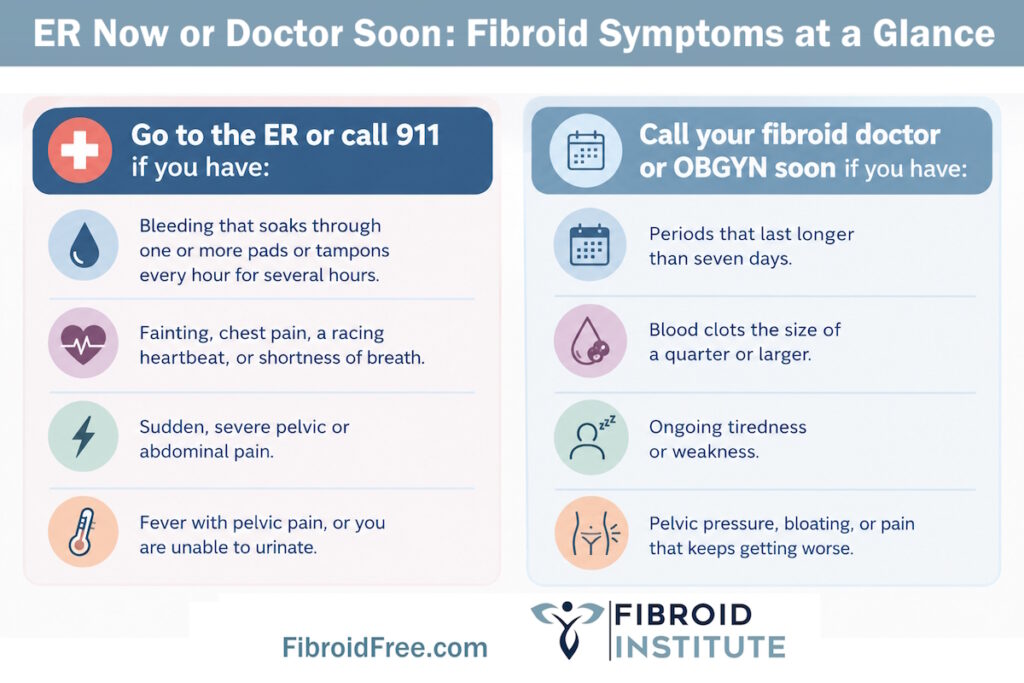
- Heavy bleeding that soaks through one or more pads or tampons every hour for several hours in a row
- Blood clots the size of a quarter or larger
- Severe anemia symptoms, such as dizziness, fainting, or shortness of breath
- Sudden, intense pelvic or abdominal pain
- Rapid abdominal swelling or increased pressure
- Weakness, rapid heartbeat, or lightheadedness from blood loss
- Difficulty urinating or emptying your bladder
- Severe constipation or signs of a bowel blockage
- Fever, chills, nausea, or vomiting with pelvic pain
- Symptoms that suddenly worsen or become unmanageable
If you are experiencing any of these symptoms right now, don’t wait—go to the nearest emergency room or call 911.
Why Do Fibroids Sometimes Lead to Emergency Care?
Generally speaking, uterine fibroids are not life-threatening. They are benign (non-cancerous) growths in the uterus, and they are extremely common. Not all fibroids cause pain, either. Many women are diagnosed with uterine fibroids and remain symptom-free for years. That said, women with symptomatic fibroids often face a list of uncomfortable and, at times, debilitating symptoms that can affect the bladder, bowels, menstrual cycle, and surrounding organs.
Uterine fibroids affected an estimated 226 million women worldwide in 2019—up nearly 79% since 1990.
None of this is meant to downplay the pain these women feel every day. Living with symptomatic fibroids can be painful and life-altering. But many of these symptoms do not develop overnight. They often start out barely noticeable, even manageable, and gradually worsen over time.
If a woman like Chantel is not receiving routine care to reduce or eliminate these symptoms, the result could be an unexpected late-night trip to the ER.
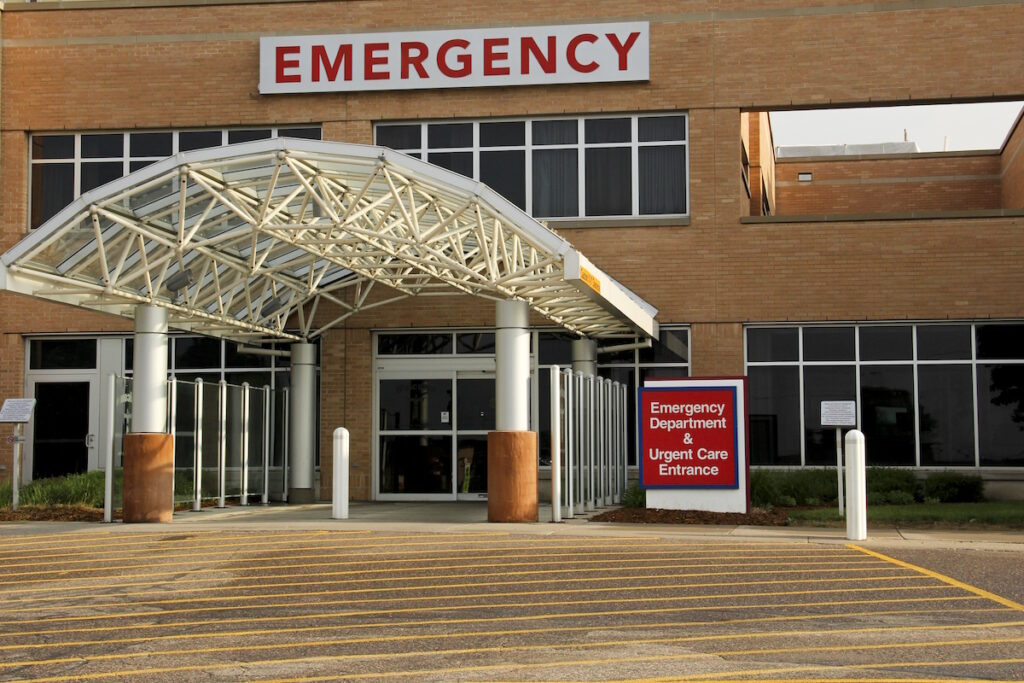
Sadly, fibroid-related ER visits happen more often than you might think. According to a 2021 University of Michigan study published in Obstetrics & Gynecology, tens of thousands of women turn to the emergency room for fibroid symptoms that have grown beyond their control. Researchers analyzed more than 487 million emergency visits by women ages 18 to 55 between 2006 and 2017. Over that period, ER visits for fibroids more than doubled, from 28,732 visits in 2006 to 65,685 in 2017.
Key findings from the study include:
- Many patients may be using the ER for care that could be provided by a regular healthcare provider.
- Fibroid care is among the costliest types of ER care—estimated to be roughly twice as expensive as other ER visits among women of similar age.
- ER visits were highest among women ages 36 to 45 and women with lower incomes.
- Women who came to the ER for bleeding-related issues were 15 times more likely to be admitted to the hospital.
“Our study suggests that patients are potentially using the emergency department for care that could and should be obtained in a long-standing trusted environment.”
Chantel’s experience is not unusual. For many women with fibroids, there is a frustrating gap between recognizing that something is wrong and getting the care needed to keep symptoms from escalating. Too often, fibroid symptoms are normalized or dismissed as something women simply must tolerate, leaving many to manage worsening pain, bleeding, and fatigue on their own until those symptoms become impossible to ignore.
Closing that gap with earlier conversations, regular monitoring, and access to effective treatment may help more women avoid reaching the point where emergency care becomes necessary.
7 Ways To Keep Fibroid Symptoms From Leading to an ER Visit
- Don’t ignore worsening symptoms — Fibroid symptoms rarely improve on their own, and waiting can lead to complications that turn into emergency fibroid symptoms. For instance, if your periods become heavier and last longer than usual, delaying treatment can lead to anemia, a condition in which your body doesn’t have enough red blood cells. Some types of fibroids, especially those that grow into the uterine cavity, tend to cause heavier bleeding than others, which can become dangerous if left untreated. The good news is that both fibroids and anemia are treatable (learn more about the link between fibroids and anemia), but you must recognize the warning signs. Likewise, pressure from growing fibroids can begin to affect nearby organs, causing urinary problems, bowel issues, or intense pain that becomes difficult to manage.
- Do your own research — An educated patient is an empowered patient. Take time to learn about fibroids, common symptoms, available treatment options, and the questions to ask your doctor. For instance, many women believe—or have been told—that the only way to treat fibroids is with surgery such as a hysterectomy or myomectomy. These are common and effective options, but they are not the only ones, especially for women who do not want surgery or are not surgical candidates. Understanding your condition can help you recognize when something has changed and make more informed decisions.
- Schedule and keep regular doctor appointments — Even if your symptoms seem manageable right now, routine appointments with your doctor and OBGYN allow them to monitor changes and address concerns before they become urgent. That is a far better option than trying to figure out next steps on your own based on what you’ve read online. Regular follow-up care can help track fibroid growth, evaluate new symptoms, and determine when additional treatment may be necessary.
- Have open, honest conversations with your OBGYN — Your doctor can only help with the information you provide. Be honest about how severe your symptoms are, how they affect your quality of life, and whether your current approach is working. Do not downplay your pain, bleeding, fatigue, or other concerns simply because you’ve learned to live with them. The better your OBGYN knows your history, the better they can tailor your care—and, if needed, refer you to an interventional radiologist, the specialist who performs UFE. The Fibroid Institute’s interventional radiologists treat fibroids with UFE every day, and we value our relationships with gynecologists and other practitioners. You can also come to us directly; no referral is required.
- Advocate for yourself — Building on the previous tip, speak up when you know something is not right. Whether it is the symptoms you’re facing or a nagging feeling that there may be more options than surgery, your concerns deserve to be heard. Seeking a second opinion or exploring all available treatments can help ensure you receive care that aligns with your goals.
- Choose the treatment option that makes the most sense for you—There is no one-size-fits-all approach to fibroid treatment. The right option depends on several factors, including the size and location of your fibroids, the severity of your symptoms, your overall health, your eligibility for UFE or surgery, and your personal goals. Working with a knowledgeable provider can help you understand your choices and select a treatment plan designed to provide meaningful, long-term relief.
- Support your overall health — Healthy habits such as regular exercise and a balanced diet will not cure fibroids, but they can support your overall health while you explore treatment. For instance, obesity is a known risk factor for fibroids, and extra weight can add to the back and pelvic discomfort many women with fibroids already feel. For most adults, a healthy BMI (body mass index) is 18.5 to 24.9.
Have You Considered Uterine Fibroid Embolization?
One of the best ways to get ahead of emergency fibroid symptoms is to treat the fibroids causing them. Uterine fibroid embolization is not the only treatment option for women with symptomatic fibroids, but it has become the gold standard for fibroid treatment without surgery. Rather than relying on incisions to remove fibroids, an interventional radiologist makes a tiny nick in your wrist, guides a thin catheter through your radial artery to the non-essential blood vessels that feed your fibroids, and releases tiny particles that block their blood supply. Without that blood supply, the fibroids shrink and die.
Just a few additional benefits of UFE at the Fibroid Institute include:
- Covered by most major medical insurance
- No hospital stay
- Tiny wrist puncture, no need for vaginal access
- Short recovery period
- Treats multiple fibroids at once
- Over 90% effective in reducing symptoms
- Doctors give patients their direct mobile number
- Clinics that are rated 4.9/5.0 across multiple locations
- Among the top experienced UFE providers nationwide
The bottom line is that women have more options than ever, and fibroid treatment does not have to be invasive. In fact, more women than ever are choosing to forgo bloody surgical options such as hysterectomy and myomectomy by choosing UFE. With a minimally invasive approach, a woman who fears fibroid surgery or is not a surgical candidate can avoid all of that and still achieve highly successful results.
Frequently Asked Questions (FAQs) About Emergency Fibroid Symptoms
Contact Fibroid Institute Today to Take Control of Your Fibroid Symptoms
You can absolutely receive appropriate care for emergency fibroid symptoms in the ER. But routine visits with your doctor and OBGYN, along with the tips above, can help you take control of your fibroid symptoms much earlier and explore effective treatment options so you can live pain-free sooner rather than later. One of those options is UFE.

At the Fibroid Institute, we are dedicated to helping you become #FibroidFree. Our physicians are interventional radiologists specializing in UFE (uterine fibroid embolization), a non-surgical procedure that causes fibroid tumors to shrink.
Women experiencing heavy periods, pelvic pressure, anemia, or rapidly growing fibroids may be candidates for UFE. Determining eligibility depends on factors including fibroid size and location, symptom severity, future fertility goals, and overall health. Whether uterine fibroid embolization is the right option for you, our team of fibroid doctors is always on hand to partner with you and your PCP or OBGYN to determine the best course of action.
At the Fibroid Institute, we set the standard of care for advanced fibroid treatment and help women achieve a symptom-free life, able to return to the activities they enjoy. Our experts are among the top specialists for uterine fibroid treatment. We help women who are experiencing painful fibroid issues get back to the lives they were meant to live.
Most major medical insurance providers cover the cost of UFE. Request a free 10-15-minute phone screening to determine if you are eligible. If you qualify for UFE after the screening, you can schedule your on-site or telehealth consultation. Get started now by calling our Dallas, Texas clinics at 214-838-6440, Houston, Texas clinics at 713-903-3733, South Carolina clinics at 843-628-4290 or complete the form below.
"*" indicates required fields
This information is not a substitute for professional medical advice. Before starting any new treatment or if you have questions about a medical condition, always seek the advice of your doctor or other qualified health provider.
The Fibroid Institute serves the Charleston, South Carolina, Dallas/Fort Worth, Texas and Greater Houston, Texas metro areas including Addison, Allen, Arlington, Bedford, Bellaire, Carrollton, Cedar Hill, Central Houston, Charleston, Clear Lake, Cockrell Hill, Conroe, Craig Ranch, Cypress, Dallas, North Dallas, DeSoto, Duncanville, Euless, Fort Worth, Frisco, Garland, Grand Prairie, Highland Park, Houston, Hurst, Hutchins, Irving, Katy, Kingwood, Lancaster, League City, McKinney, Mesquite, Mt. Pleasant, Murrells Inlet, Orangeburg, Park Cities, Plano, Richardson, Sherman, Spring, Stafford, Sugar Land, Summerville, Texas City, The Woodlands, Universal City, University Park, Walterboro, Webster and more.
*Patient names and/or photos may be changed to protect patient confidentiality.
