
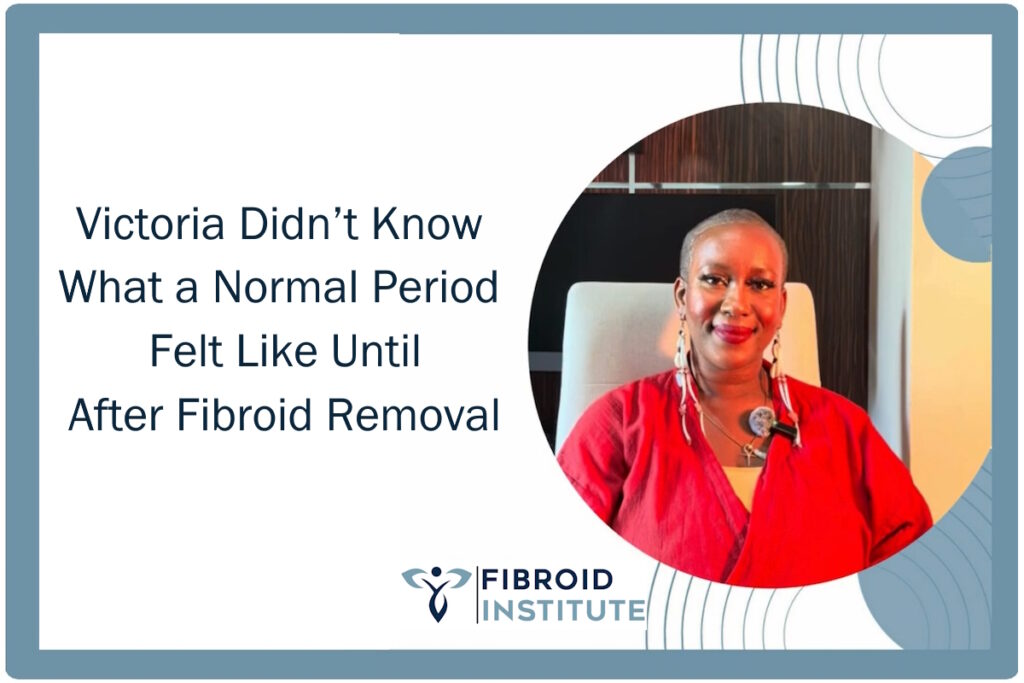
Victoria* didn’t mince words when she told us she didn’t know what a normal period felt like. From the moment she had her first at 11 years old, she dealt with severe cramping, chronic pain, and heavy bleeding. If she wasn’t resting with a heating pad to get some form of relief, she was begging for another few pills of Midol. None of that changed as she got older, went through school, started working, met her husband, and grew her family. If anything, the symptoms worsened—especially after she developed and was diagnosed with uterine fibroids. There were plenty of times when she was forced to work from home. In other instances, she was essentially incapacitated, unable to schedule family outings, travel, spend time with her husband, and do all the things many of us take for granted. She knew fibroid removal was the answer, but it wasn’t until she was referred to the Fibroid Institute, where she learned about a nonsurgical option called uterine fibroid embolization (UFE), that she realized she had fibroid treatment options.
In that moment, she went from thinking that she had four fibroids and that her options were to have either a hysterectomy or a myomectomy to learning that she actually had 10 large fibroids, surgery wasn’t necessary, and that one quick procedure could give her the symptom-free life she never thought existed.
“When you grow up in that existence, you don’t think much about it because you think it’s normal,” Victoria said. “It was debilitating, but the good news is that I can now say that in the past tense. I’m free now.”
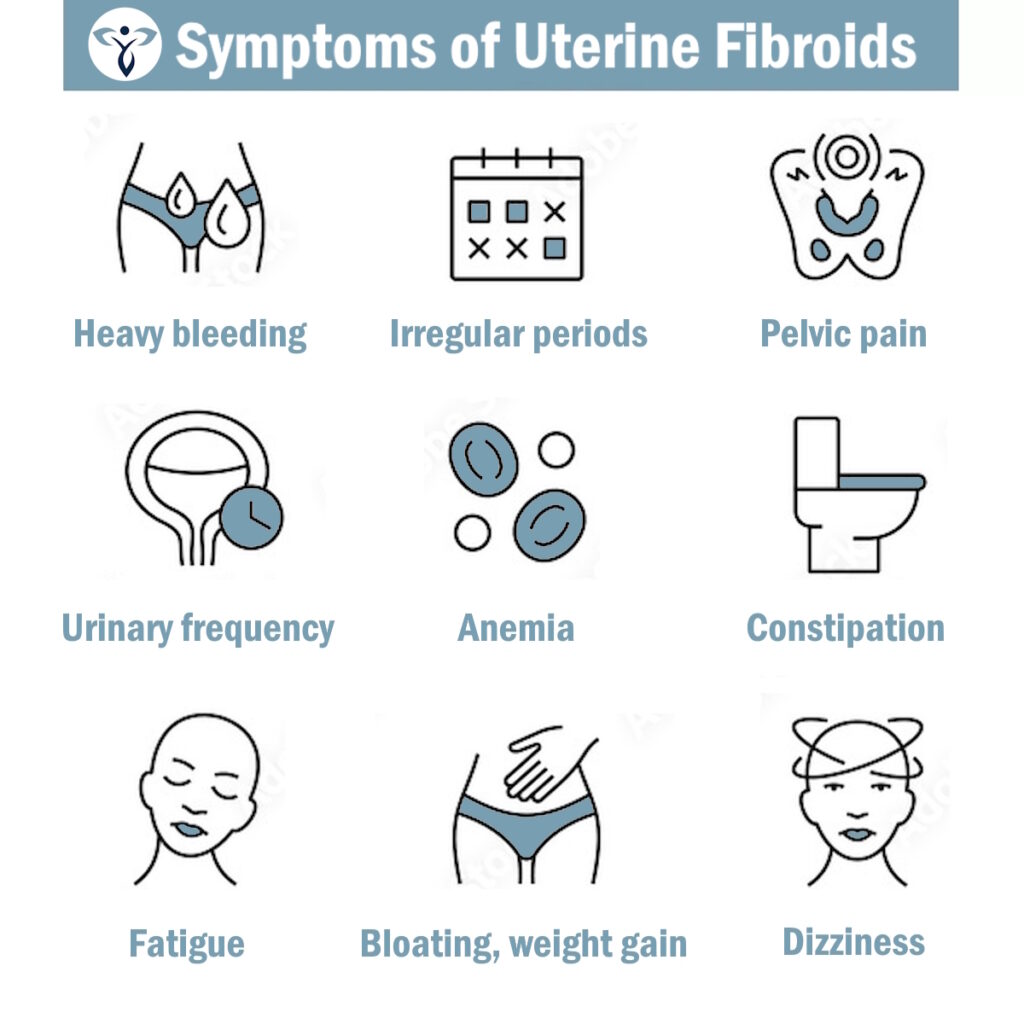
Victoria’s Fibroid Symptoms:•Heavy menstrual bleeding•Painful periods•Chronic pain•Abdominal cramping•Lack of mobility•Hard to stay active
I Was Told ‘You Have Two Options: A Hysterectomy or a Myomectomy’
Victoria said she went the traditional route when first looking into her fibroid symptoms and how to overcome them. She met with a nurse practitioner, who recommended that she visit with a doctor and have a ultrasound done. It was at that moment that something didn’t feel right. For starters, while Victoria was comfortable with having a ultrasound done, she also knew that it was often used as a “first step” in evaluating fibroids. Sure, it could detect fibroids and provide some useful information about size, number, and general location, but an MRI could provide a much more detailed view and give physicians critical information about size, location, condition of the uterus, blood supply, and other characteristics that could determine the most appropriate treatment approach.
Victoria said the doctor she visited with relied on the ultrasound to make her recommendations. Victoria was told that she had two options: a hysterectomy (if she didn’t intend to have kids in the future), or a myomectomy (if she did hope to have children someday). Here is a quick breakdown of the two surgeries:
Hysterectomy
A hysterectomy is one of the most widely utilized procedures for fibroid removal, so much so that over 600,000 of them are performed annually in the United States. The problem some women have with it is that it is an invasive surgery with a lengthy recovery time. The goal is to remove all or part of a woman’s uterus and in some cases, a woman’s fallopian tubes and ovaries are also removed.
- Partial hysterectomy — Only part of the uterus and possibly the ovaries are removed. The cervix is left intact.
- Total hysterectomy — Also known as a complete hysterectomy, this involves removing all of the uterus, the cervix, and possibly the fallopian tubes and ovaries.
- Radical hysterectomy — This procedure involves removing the uterus, the cervix and its surrounding tissue, and the upper part of the vagina. Usually, the fallopian tubes and the ovaries are removed.
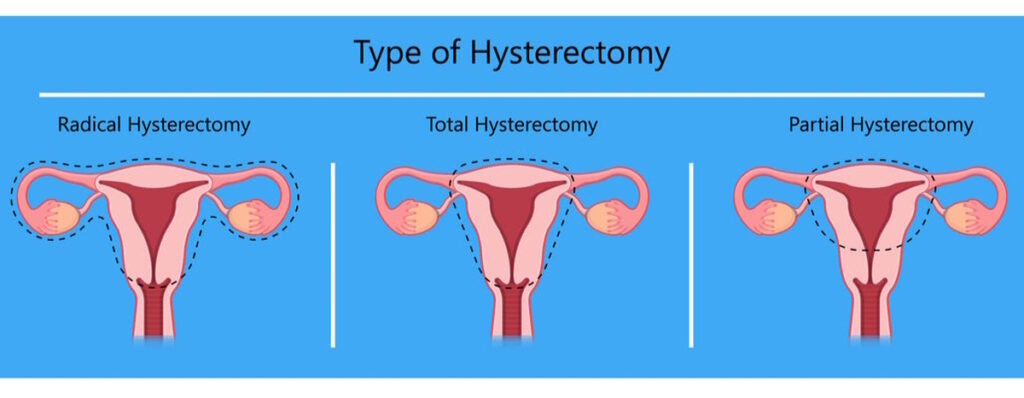
The good news is that there is almost no chance of fibroids returning after having a hysterectomy. However, the patient would no longer be able to have children.
Myomectomy
Rather than remove the entire uterus, a myomectomy focuses on taking out only the fibroids causing symptoms while preserving the uterus itself. Depending on how many fibroids are removed, your doctor may also need to reconstruct the uterus to maintain its strength and function. So, for women who want to keep their uterus, this distinction makes a big difference. And the numbers clearly show their approval. Approximately 30,000 myomectomy surgeries are performed annually, and many patients say they no longer experience fibroid pain and symptoms.
- By choosing a hysterectomy or myomectomy, women like Victoria could expect to overcome these and other debilitating fibroid symptoms:
- Heavy menstrual bleeding
- Debilitating cramps, pelvic pain, and pressure
- Periods that last longer than a week
- Pain during sex
- Back or leg pain
- Urinary frequency
- Weight gain or bloating, and swelling in the abdomen
- Constipation, diarrhea, and rectal discomfort
- Excessive fatigue
“The doctor was so cavalier about the whole decision, even saying something like, ‘I’m going to gut you like a fish, and you’re going to be out at least six weeks,’” Victoria said. “He’s talking about taking out my uterus, and everything was said so quickly that maybe I just went along with it [at first].”
She added, “What stuck with me was that he was making that decision after a very surface-level ultrasound. He didn’t have the full picture, and that made me feel very uncomfortable.”
Seeking a Second Opinion for Fibroid Removal
After talking through everything with her mother, it was clear that surgery was not the option Victoria was willing to undergo. And there were plenty of studies to back her decision. For instance, according to a study in the American Journal of Obstetrics & Gynecology, as many as 1 in 5 women in the United States whose doctor recommended a hysterectomy did not need one. Meanwhile, the same researchers found that 37.7% of women included in the study had no documentation indicating they underwent alternative treatment before a hysterectomy. There had to be another way, and as luck would have it, she was referred to the Fibroid Institute.
According to a study in the American Journal of Obstetrics & Gynecology, as many as 1 in 5 women in the United States whose doctor recommended a hysterectomy did not need one.
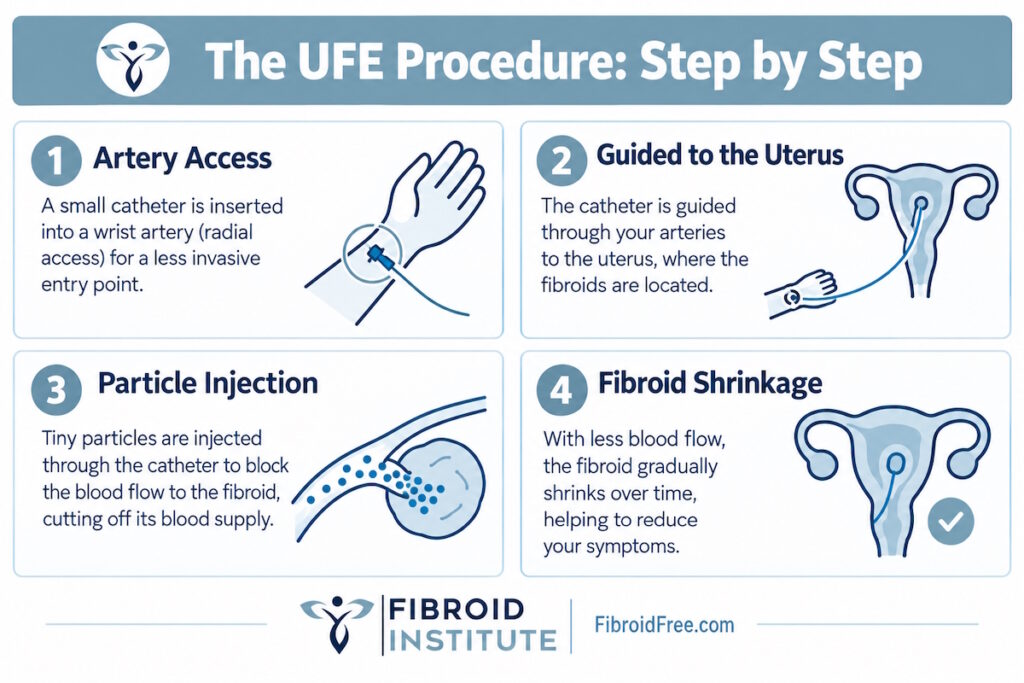
Victoria said she was immediately put at ease when the Fibroid Institute conducted a full MRI and found not four but 10 fibroids—many of which were 10 centimeters large. It was then explained to her that there was another option in the form of uterine fibroid embolization (UFE). With UFE, there was no hospital stay or lengthy recovery time. And yet, all her fibroids could be treated simultaneously with nothing more than a small wrist puncture.
As her fibroid specialist, Dr. John Fischer inserted a small catheter into the radial artery and advanced it to the location of the targeted area. He then injected small particles to block blood flow to the fibroid tumors, causing them to shrink and die.
“To be able to not be in pain is the biggest thing,” Victoria said following her procedure. “I remember when I had my first menstrual cycle after the UFE procedure. I was almost incredulous. I didn’t even know I was experiencing a menstrual cycle at first. I thought, wow. I can focus; I’m not worried about family planning or being in constant pain. It completely changed my life for the better.”
Additional UFE Benefits•Procedure typically completed in under an hour•Recovery time is 7-10 days•Tiny wrist puncture, no need for vaginal access•Avoid side effects of pharmaceutical hormone therapies•No incisions, which means no surgical scarring•Over 90% of patients see dramatic improvement in symptoms
Having the Right Fibroid Doctor in Your Corner Is Key
Fibroid doctors are not difficult to find. While this is comforting, women today are becoming increasingly informed and empowered. They know they have fibroids. A growing number of women also know that UFE is a viable alternative to a hysterectomy or myomectomy. As a result, they expect more from the team of fibroid doctors providing the care.
For women with fibroids, it’s more about access, communication, comfort, innovation, and trust. They deserve supportive experience from start to finish, which is why top providers must align their care with these expectations.
That’s exactly what tipped the scales for Victoria when she came to the Fibroid Institute:
- Concierge-level service
- Accurate, free, and easy information
- Access to advanced medical technology and procedures
- Care from 4.9/5-star patient-rated doctors
“Every step of the way, the level of care was so bespoke, it was like having a private team dedicated to serving and supporting you in this journey,” Victoria said. “After the procedure, my doctor was available during the weekend. When I was on the table and getting ready for the procedure, the nurse could tell I was getting a little nervous and asked me if I needed anything. I told her I was cold, and she brought me a blanket out of a warmer and added a fan close by. There are levels to this, and Fibroid Institute’s process should be the gold standard.”
She added, “Don’t take the first advice you get. These aren’t small decisions.”
Over 90% of patients see dramatic improvement in symptoms after uterine fibroid embolization (UFE).
Frequently Asked Questions (FAQs) About Fibroid Removal vs UFE
Looking for Innovative Fibroid Treatment? You’ve Found it at the Fibroid Institute
Victoria’s story proves that advocating for yourself and not accepting fibroid pain as a normal part of being a woman is critical to recapturing the life you deserve to live. Thousands of women choose hysterectomies and myomectomies every day, and for many of them, it is the right choice. But for so many others, there are options—especially when you do not want or are not eligible for surgery.
At the Fibroid Institute, we are dedicated to helping you become #FibroidFree. Our physicians are interventional radiologists specializing in UFE (uterine fibroid embolization), a non-surgical procedure that causes fibroid tumors to shrink.
In addition, we simplify your UFE journey by managing everything from insurance to PCP communication, while providing all patients with direct access to their fibroid doctor before and after their procedure. Our physicians are board-certified interventional radiologists and experts passionate about helping women become #FibroidFree. The bottom line is that you do not have to worry about the ongoing challenges of missing work and life events with UFE as your fibroid treatment.
At the Fibroid Institute, we do not believe you need to decide between suffering in silence and having invasive surgery. With multiple locations, our fibroid clinics help thousands of women avoid fibroid surgery and find relief from their fibroid symptoms. Meet some of these women here:
Most major medical insurance providers cover the cost of UFE. Request a free 10-15-minute phone screening to determine if you are eligible. If you qualify for UFE after the screening, you can schedule your on-site or telehealth consultation.
Get started now by calling our Dallas, Texas clinics at 214-838-6440, Houston, Texas clinics at 713-903-3733, South Carolina clinics at 843-628-4290 or complete the form below.
"*" indicates required fields
This information is not a substitute for professional medical advice. Before starting any new treatment or if you have questions about medical conditions, always seek the advice of your doctor or other qualified health provider.
The Fibroid Institute serves the Charleston, South Carolina, Dallas/Fort Worth, Texas and Greater Houston, Texas metro areas including Addison, Allen, Arlington, Bedford, Bellaire, Carrollton, Cedar Hill, Charleston, Clear Lake, Cockrell Hill, Conroe, Craig Ranch, Cypress, Dallas, DeSoto, Duncanville, Euless, Fort Worth, Frisco, Garland, Grand Prairie, Highland Park, Houston, Hurst, Hutchins, Irving, Katy, Kingwood, Lancaster, League City, McKinney, Mesquite, Mt. Pleasant, Murrells Inlet, Orangeburg, Park Cities, Plano, Richardson, Sherman, Spring, Stafford, Sugar Land, Summerville, Texas City, The Woodlands, Universal City, University Park, Walterboro, Webster and more.
*Patient names and/or photos may be changed to protect patient confidentiality.
Medically reviewed by board-certified interventional radiologists Dr. Fischer, Dr. Shaw and Dr. Slonim, September 2026
