

When Jasmine* was having persistent fatigue, chest pressure, and high blood pressure, she saw multiple doctors for what she was convinced was a heart issue. But after endless labs, imaging scans, visits to her primary doctor, a handful of cardiologists, a gastroenterologist, a neurologist, a homeopathic specialist, and emergency trips to the ER, she still found herself chasing symptoms no one could explain for nearly 18 months! It took relentless self‑advocacy and sleepless nights to finally uncover the real culprit—uterine fibroids. Friends and family supported her throughout, but when the final diagnosis was uncovered, they had a hard time making that connection. After all, patients are used to hearing about more common fibroid symptoms like heavy menstrual bleeding, longer than usual periods, and lower back pain. Yet for some women, fibroid symptoms can closely overlap with what doctors and patients alike associate with cardiovascular problems. When this happens, attention is understandably directed toward the heart—often for months—while the true root cause remains hidden in plain sight.
If you or a loved one finds themselves cycling through blood pressure medications and cardiac testing, only to chase symptoms no one can explain, it may be time to turn your attention to the possibility of fibroids. Understanding how fibroids mimic heart-related symptoms is one of the most overlooked pieces of women’s health—and it is why seeing a knowledgeable fibroid doctor can make all the difference when answers are not adding up.
When “Heart” Problems Do not Quite Add Up
February is American Heart Month, and many women or their loved ones use it as a reminder to stay on track with doctor’s appointments and their overall health. The event also shines a light of the telltale signs of this deadly condition, including chest pressure, fatigue, shortness of breath, and high blood pressure. But what if those symptoms are not coming from the heart at all? While Jasmine’s situation is rare, increasing research shows that fibroid symptoms that most people would never attribute to fibroids can closely mimic signs of heart disease. For instance:
- Heart palpations
- Numbness and tingling of the hands
- Arrhythmia
- Vein Stenosis
- Blood clots
- Tremors
- Loss of consciousness
- Swelling of lower extremities
- Panic attacks and anxiety
- Respiratory problems
- Heart disease and heart failure
Researchers estimate that 70-80 percent of all women develop fibroids between the ages of 35 and 54, though they can be just as common among even younger women of childbearing age. Some experience fibroid symptoms, but many others do not and take a wait-and-see approach with their gynecologist. Unfortunately, fibroids tend to grow and multiply the longer they are left untreated, leading to many of the common symptoms mentioned earlier. Not every woman’s fibroid journey is the same, so these symptoms can present themselves very differently from one woman to the next. In extreme cases, the symptoms may go off the typical chart and look like something else is wrong—like heart disease. Numerous studies back this up. A 2022 study found a strong association between uterine fibroids and hypertension.
This does not necessarily mean fibroids cause heart disease directly. That said, they may contribute to persistent high blood pressure through vascular changes, increased strain on the body from fibroid-related blood loss, and hormonal issues.
A 2024 study of 2,570 middle-aged women with untreated and new-onset hypertension also suggested that they had an increased risk of new fibroids—further suggesting a possible two‑way relationship. Furthermore, a retrospective study of over 1,665 premenopausal women with heavy menstrual bleeding found that those with fibroids had significantly lower hemoglobin and a markedly higher risk of anemia. This is because the heart works harder to compensate for low oxygen.
Lastly, there is strong evidence that large fibroids can compress internal organs and major blood vessels, leading to pulmonary embolisms and recurrent deep vein thrombosis. This deadly condition leads to blood clots. Treating uterine fibroids can decrease the risk of another thrombotic event and keep the patient off anticoagulation.
Can Chest Pressure and Impaired Heart Pumping be Caused By Fibroids?
Yes. In another case study, a 45-year-old woman visited the ER because of abdominal bloating and dyspnea. Also known as shortness of breath, dyspnea is the uncomfortable feeling of not getting enough air, often described as chest tightness, gasping, or labored breathing, and it can stem from heart/lung issues like asthma, heart failure, infections, or even anxiety. Electrocardiographic findings were normal, but doctors found a benign, but rather large, fibroid measuring 18×12 centimeters. Potential systemic effects of large fibroids can include:
- Abdominal or pelvic pressure leading to reduced lung expansion
- Compression of major blood vessels, affecting blood return to the heart
- Increased cardiac workload due to higher blood volume demand
- Hormonal effects (e.g., altered estrogen receptor signaling) influencing vascular tone
- Refractory or unexplained fatigue and exercise intolerance
- Rare cases of impaired heart function or heart failure-like symptoms
After having the fibroid removed, her cardiac function markedly improved. The study went on to state that “increased demand for blood supply, the dominant effect of ERα compared to that of ERβ, and compression complications of fibroids may theoretically contribute to the diagnosis of heart failure.”
In other words, fibroids must be considered as a potential cause of refractory heart failure, warranting a multidisciplinary approach for investigation and management.
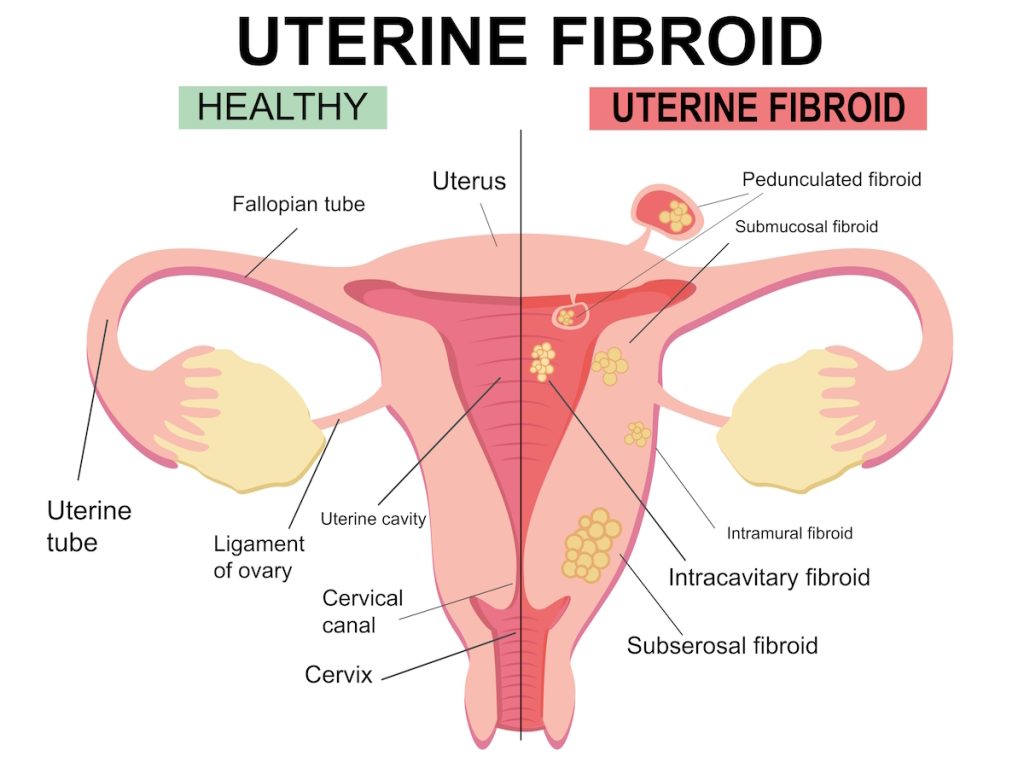
A Common Misnomer Is That Fibroids Are a Gynecological Issue Only
Fibroids are often found during routine pelvic exams with your gynecologist. They are also found in and around a woman’s uterus. As a result, it is easy to assume this is a gynecological issue only. In reality, fibroids are far more than a localized reproductive concern—they are vascular lesions with systemic implications. Why? Blood supply. The more blood supply a fibroid has, the bigger it can grow and demand more oxygen and nutrients from the body. This causes increased ripple effects throughout the body. Since these effects can mimic symptoms of heart disease, fibroids are often overlooked or misdiagnosed, particularly when women present with systemic or “cardiac-like” symptoms rather than classic gynecological complaints.
It is not uncommon for multiple specialists to investigate heart, lung, or vascular issues before the fibroid is even identified as the root cause. This is why visiting with an interventional radiologist is so important. Interventional radiologists can evaluate the blood supply feeding the fibroid, assess its size and location, and recommend minimally invasive treatments that not only target the fibroid itself but also help reduce systemic complications.
In other words, a multidisciplinary approach ensures that the fibroid’s gynecological, vascular, and systemic impacts are all considered—reducing the risk of prolonged misdiagnosis and unnecessary procedures.

If Fibroids Are The Cause, UFE Can Be the Answer To Your Prayers
Uterine Fibroid Embolization (UFE) has become the gold standard for minimally invasive fibroid treatment without the need for surgery. Rather than removing the fibroids through surgery, the goal is to cut off their blood supply. Everything starts with a tiny puncture on your left wrist. A very small catheter is then inserted through this into your artery. Our experts use X-ray guidance to locate the vessels that supply blood to your large fibroids. Small particles are injected into the vessels, blocking blood flow to the fibroids, causing them to shrink and die.
UFE is the treatment of choice for our qualified patients because it treats all fibroids simultaneously. In doing so, many of the fibroid symptoms improve dramatically, even ones they thought to be heart disease.
UFE is an outpatient procedure, with no hospitalization required. Advantages of UFE at Fibroid Institute include:
- Covered by most major medical insurance plans
- Over 90% of patients see dramatic improvement in symptoms
- No hospital stay and shorter recovery period (one week in some cases)
- Avoids side effects of pharmaceutical hormone therapies
- Tiny wrist puncture, no need for vaginal access
- Fibroid doctors are board-certified interventional radiologists
- In-office procedure instead of a hospital stay
- Procedure typically takes less than an hour
- Patients get direct access to their doctor’s mobile number

When “Heart” Symptoms are Caused By Fibroids: Fibroid Institute Is Here for You
Chest pressure, fatigue, and hypertension can be frightening—but they do not always point to heart disease. Sometimes, they are hidden fibroid symptoms masking the real cause. If you have been told your heart is fine, but your symptoms are not improving, a consultation with a fibroid doctor may be the missing step. A knowledgeable fibroid doctor can evaluate whether your symptoms align with less obvious fibroid symptoms and discuss treatment options that do not involve unnecessary delays.
At Fibroid Institute, we set the standard of care for advanced fibroid treatment, helping women achieve a symptom-free life. We specialize in UFE because it delivers the best results in the least amount of time and with limited pain. On top of that, we simplify your UFE journey, managing everything from insurance to PCP communication and offering all patients physician-direct access before and after their procedure.
Most major medical insurance providers cover the cost of UFE. With multiple locations, our Dallas and Houston fibroid clinics help thousands of women avoid fibroid surgery and find relief from their fibroid symptoms. Our fibroid doctors are board-certified interventional radiologists and experts passionate about helping women become #FibroidFree.
Get started now in Dallas by calling 214-838-6440, in Houston by calling 713-903-3733, or complete the form below.
"*" indicates required fields
Fibroid Institute Texas serves the Dallas and Houston metro areas including Texas City, Cypress, League City, Bellaire, Addison, Carrollton, Plano, Frisco, Craig Ranch, McKinney, Allen, Fort Worth, Grand Prairie, Hurst, Euless, Bedford, Arlington, Hutchins, Irving, Duncanville, DeSoto, Cedar Hill, Lancaster, Cockrell Hill, Highland Park, University Park, Park Cities, Garland, Mesquite, Richardson, Dallas, Sherman, Houston, Sugar Land, Katy, Webster, Clear Lake, The Woodlands, Universal City, Spring, Kingwood, Stafford, Conroe, and more.
*Patient names and/or photos may be changed to protect patient confidentiality.
This information is not a substitute for professional medical advice. Prior to starting any new treatment or if you have questions regarding a medical condition, always seek the advice of your doctor or other qualified health provider.
