
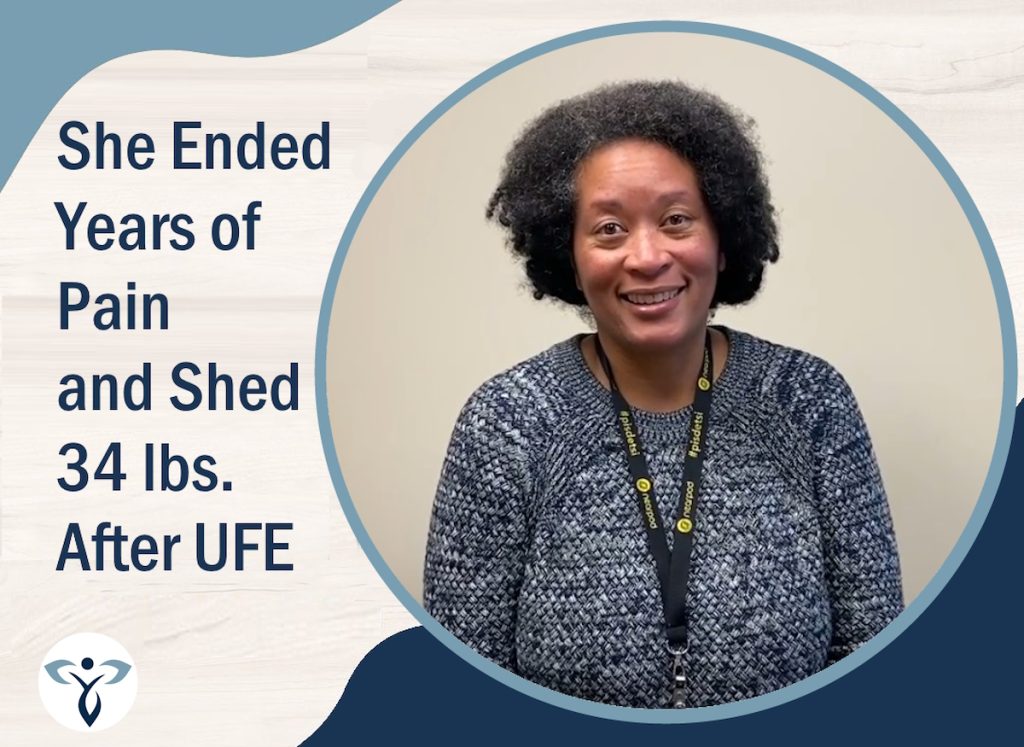
Every woman’s fibroid journey is different. This is especially true when it comes to the symptoms they experience. For many, that means heavy menstrual bleeding, pelvic pain, or a mix of both. For others, it is a range of symptoms that make everyday life difficult. For Jean*, a schoolteacher at a local ISD, each day felt as if it were flooded with every imaginable fibroid symptom. She had heavy bleeding most of the month, extreme cramping, back pain, constipation, lack of energy, weight gain, and painful intercourse. These and other symptoms were taking over her life, but a fibroid doctor had good news. There was one minimally invasive procedure, Uterine Fibroid Embolization (UFE), that could address them all. Now, Jean is telling other women with fibroids to “run, do not walk,” to have the procedure done.
When Jean was interviewed a few months after her UFE procedure, she was excited to report that years of painful symptoms—all of them, she added—were a thing of the past. She had more energy to play with her kids and live life the way she always wanted. And as a bonus, she had lost a staggering 34 pounds.
“I am in my 40s, and [dealing with all those painful symptoms] every day was not how I really wanted to live my life—being in pain all the time,” she said. “I would say run, do not walk … do your research, of course, but I’m here to tell you this procedure is a lifesaver. If you want to get back to who you know you’re supposed to be without fibroids weighing you down, you should talk to a fibroid doctor and have the UFE procedure.”
Jean’s Fibroid Symptoms
Heavy menstrual bleeding
Bad cramping
Bloating and weight gain
Back pain
Constipation
Lack of energy
Reduced sex drive
Weight Gain and the Many Ways Fibroids Disrupt Daily Life
Jean mentioned in her interview that she was diagnosed by a fibroid doctor while in her 40s. The pain that came with it was not something she expected; she even added that she was still too young to be dealing with so much pain. Sadly, this is commonly the decade when fibroids can reach their peak in size, location, and symptoms. For women who have not experienced fibroids before and do not know much about how they can disrupt daily life, it can be hard to imagine the litany of symptoms that can arise from having one or several fibroids.
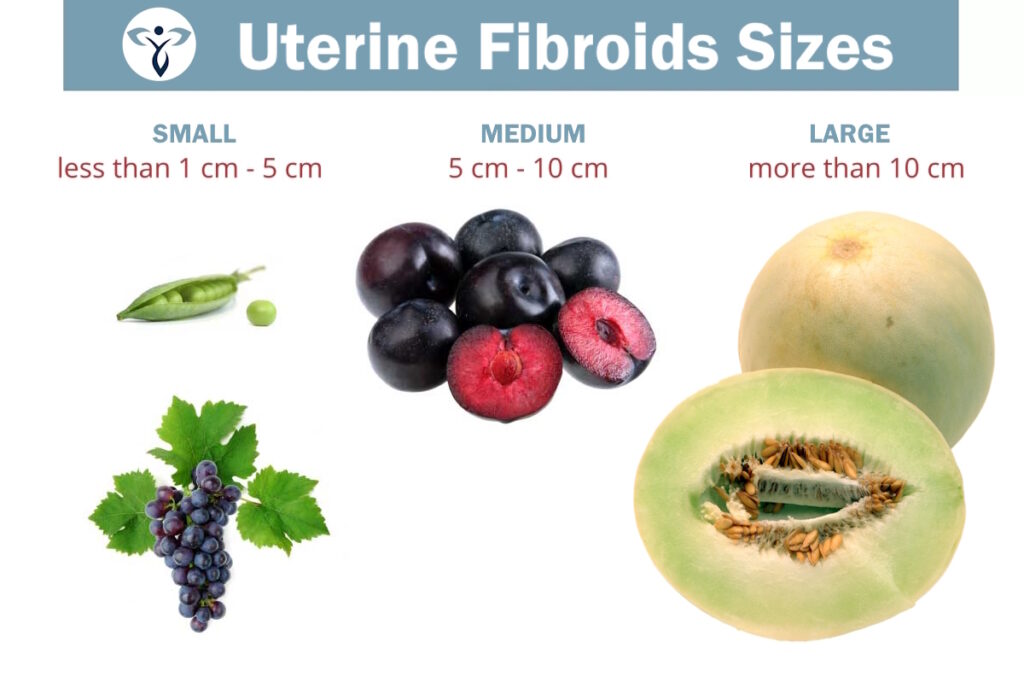
Fibroid Size Chart
SMALL FIBROIDS:
Between 1 cm and 5 cm. Basically, the size of a small seed to a cherry.
MEDIUM FIBROIDS:
Between 5 cm to 10 cm. Can be the size of a plum to an orange.
LARGE FIBROIDS:
Greater than 10 cm. The size of a melon, grapefruit, watermelon, or a small pumpkin.
Depending on their size, number, and location, fibroids can trigger symptoms that interfere with everything from work to sleep and even intimacy. Examples of symptoms you may experience during this stage include debilitating menstrual cramps, anemia due to excessive blood loss, back and leg pain, an enlarged abdomen, constipation, urinary frequency issues, rectal discomfort, pelvic pain and pressure, and prolonged periods.
Of all the ways fibroids can negatively impact a woman’s life, weight gain and bloating are perhaps one of the most frustrating. In an instant, your favorite clothes do not quite fit right, and your abdomen might protrude so much that it gives off the impression of pregnancy. As a result, the number on the scale continues to rise.
Here are a few basic reasons for the link between fibroids and weight gain:
- Not all fibroids stay small — A fibroid doctor will tell you that fibroids can grow in clusters to create a large, heavy mass. In many cases, they can range from the size of a pea or bean to a melon or grapefruit and can cause abdominal swelling. As a result, this can make a woman appear pregnant and that she has gained a lot of weight.
- Fibroids are under hormonal control — Fibroids tend to grow at a more rapid pace during the reproductive years when hormone levels (specifically, estrogen and progesterone) are at their highest.
- Constipation and digestive sluggishness — Pressure on the bowels from fibroids can lead to irregularity and a constant feeling of fullness or abdominal bloating.
- Anemia — Prolonged or heavy periods can lead to anemia, a common blood disorder. Having anemia can make you feel tired and weak, leading many women to scale back on exercising and instead sit on the couch or in bed and eat more. This, too, leads to weight gain.
- Water retention and inflammation — Fibroids can trigger inflammation in the body, which leads to bloating, fluid retention, and a feeling of heaviness around the abdomen.
- Reduced physical activity — Chronic pain, fatigue, and heavy bleeding can drain energy levels, making regular exercise more difficult and weight gain more likely.
This can lead to various emotional difficulties, including body image issues, loss of connection with your significant other, sexual unpredictability, and feelings of hopelessness. Jean more than verified that weight gain—coupled with her many symptoms—kept her from being able to have intimate moments with her husband. She also longed for the days when she could get back outside and play basketball with her boys.
“I am in my 40s, and [dealing with all those painful symptoms] every day was not how I really wanted to live my life—being in pain all the time,” she said. “I would say run, do not walk … do your research, of course, but I’m here to tell you this procedure is a lifesaver. If you want to get back to who you know you’re supposed to be without fibroids weighing you down, you should talk to a fibroid doctor and have the UFE procedure.”
‘Run, Do not Walk’ to Have a UFE Procedure
The good news? Once fibroids are treated by a fibroid doctor—especially through a minimally invasive option like uterine fibroid embolization (UFE)—that stubborn bloating and extra weight often begin to fade. As the fibroids shrink, inflammation subsides, and energy levels return. As a result, women feel lighter, healthier, and more like themselves again. Jean agreed, saying that her life immediately changed for the better after consulting with her fibroid doctor.
She knew she had several options—from invasive procedures such as hysterectomy to non-surgical treatment options. But she ultimately chose UFE, and the rest, as they say, is history.
Unlike a hysterectomy, which removes the uterus to eliminate any threat of painful fibroids, the goal of UFE is for the fibroid doctor to cut off blood flow to all fibroids (regardless of size and location), causing them to shrink and die. As they shrink and die, you no longer have painful symptoms, which can, in turn, help all areas of life—emotional and physical. As opposed to fibroid removal through invasive surgical methods, your interventional radiologist at Fibroid Institute inserts a small catheter into the radial artery at the wrist. They use X-ray guidance to locate the vessels that supply blood to your fibroids, then inject small particles into the vessels to block the blood flow to fibroids.
You have less pain and quicker recovery time than surgery, all while reducing your fibroid symptoms.
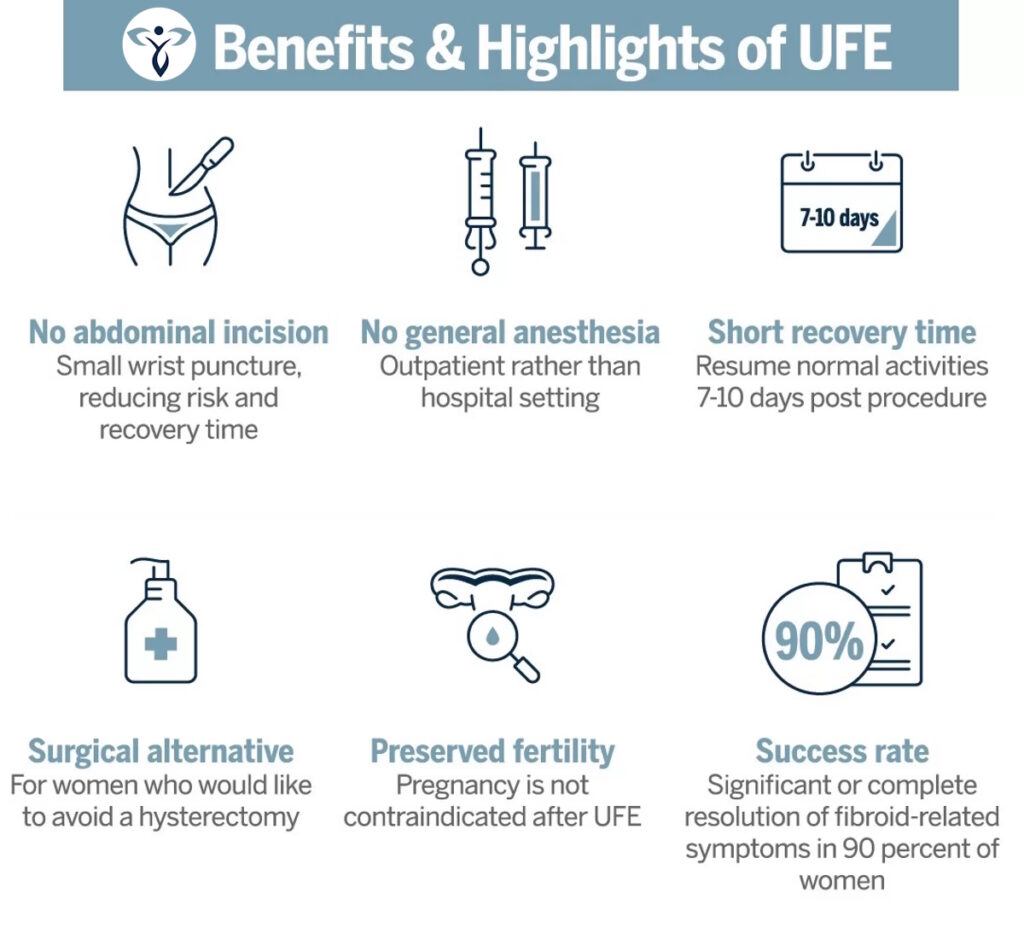
Just a few advantages of UFE at Fibroid Institute include:
- Innovative, advanced procedure
- No hospital stay
- Shorter recovery period (one week in some cases)
- No scarring
- All fibroids may be treated at the same time
- Dramatic reduction in fibroid symptoms
- The uterus is spared
- Concierge-level medical care
- Access to your fibroid doctor’s mobile number
“My energy has come flooding back,” Jean said. “I’ve lost 34 pounds, and I’m able to maintain a consistent exercise regimen. More importantly, I’m pain-free. My boys love being able to run around with mommy and play basketball, rather than me being curled up in a ball inside because of all the pain.”
A Fibroid Doctor at Fibroid Institute Can Help You Live Life Symptom-Free
Women from all walks of life experience painful fibroid issues, and while their list of symptoms may vary, the one thing they all have in common is a desire to reclaim their lives in the most minimally invasive way possible. That is the gift a fibroid doctor can provide through uterine fibroid embolization (UFE). UFE is the gold standard for minimally invasive fibroid treatment—not just because it eliminates the threat of surgery, but also because it treats all fibroids simultaneously and gives women a new lease on life. Fibroid Institute Texas is here to do just that.

Caption: Dr. Suzanne Slonim (Dallas fibroid doctor), Dr. Cathryn Shaw (Dallas fibroid doctor) and Dr. John Fischer (Houston fibroid doctor).
At Fibroid Institute, we set the standard of care for advanced fibroid treatment and help women achieve a fibroid-free life. We specialize in UFE because it delivers results in the least amount of time and with limited pain. On top of that, we simplify your UFE journey, managing everything from insurance to PCP communication and offering all patients physician-direct access before and after their procedure.
Very few practices across the country are dedicated 100% to fibroid treatment. That is where Fibroid Institute Texas makes its mark. With multiple locations, our Dallas and Houston fibroid clinics help thousands of women avoid fibroid surgery and find relief from their fibroid symptoms. Our fibroid doctors are board-certified interventional radiologists and experts passionate about helping women become #FibroidFree.
Most major medical insurance providers cover the cost of UFE. Request a free 10-15 minute phone screening to determine if you are eligible. After the screening, if you qualify for UFE, you can schedule your onsite or telehealth consultation.
Get started now in Dallas by calling 214-838-6440, in Houston by calling 713-903-3733, or complete the form below.
"*" indicates required fields
This information is not a substitute for professional medical advice. Prior to starting any new treatment or if you have questions regarding a medical condition, always seek the advice of your doctor or other qualified health provider.
Fibroid Institute Texas serves the Houston and Dallas metro areas including Addison, Carrollton, Plano, Frisco, Craig Ranch, McKinney, Allen, Fort Worth, Grand Prairie, Hurst, Euless, Bedford, Arlington, Hutchins, Irving, Duncanville, DeSoto, Cedar Hill, Lancaster, Cockrell Hill, Highland Park, University Park, Park Cities, Garland, Mesquite, Richardson, Dallas, Sherman, Houston, Sugar Land, Katy, Webster, Clear Lake, The Woodlands, Universal City, Spring, Kingwood, Stafford, Conroe, Texas City, Cypress, League City, Bellaire, and more.
*Patient names and/or photos may be changed to protect patient confidentiality.
