

Experiencing heavy periods at any time of year is frustrating. But let’s be real: It can be especially stressful, interruptive and sometimes embarrassing during the winter holidays, when many of us go out, dress up and spend extra time with friends and family. As a result, women can turn to wearing two pads and a tampon for that menstrual cycle time of the month to increase protection and eliminate the threat of accidental bleeding through their clothes. Sadly, you may not even question it or wonder if you should see your doctor—even if your periods are heavier, longer, more painful, and happening between cycles.
We get it—your menstrual cycle can be rough even during regular periods. Many women do not look forward to it, and tacking this additional issue on top of it (along with bloating, cramps, and fatigue) can almost be too much to bear. However, there is a distinction between normal menstrual periods and abnormal bleeding. Experiencing heavy flowing periods lasting longer and more frequently is not normal and must be addressed. Typically, women of childbearing years can expect to have only one period per month like clockwork.
If your period is so heavy, or you experience excessive clumps of period blood, that you feel the need to double up, It is time to seek help for what could be an undiagnosed gynecological condition.
Is it Normal to Double Up During My Cycle?
In a word, no. But before we get to that, let’s define what a normal menstrual flow typically looks like. After all, this can be confusing since 1) talking about our periods is not something casually discussed with friends, and 2) all women are unique. For example, some women have heavy periods within the first two years of puberty that subside on their own. Then again, others do not. Furthermore, some women experience bloating, cramping, and pain, and others may have good and bad months. Therefore, it can be challenging to define what constitutes heavy periods.
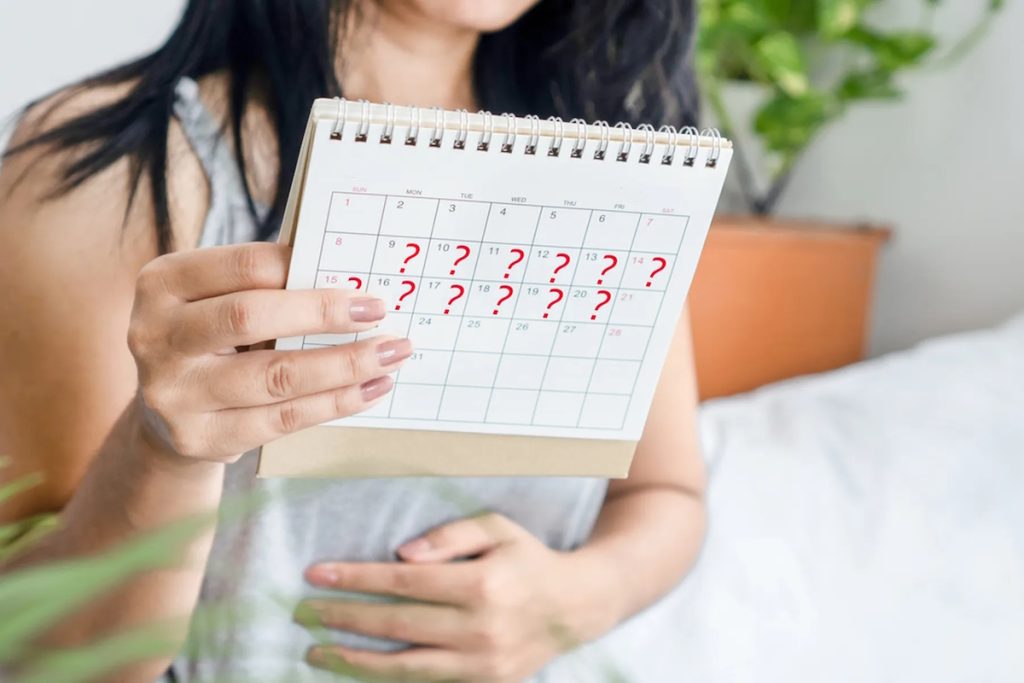
One way to determine what is normal for you is to track your cycle. The popular women’s health app, Flo, has made this process easier than ever with its period and cycle tracking app, making it simpler to spot irregularities.
With that said, a normal menstrual flow typically lasts three to eight days and occurs every 22 to 38 days, with the menstrual cycle counted from the first day of one period to the first day of the next. Also, a typical menstrual flow is less than 80 ml of blood per period cycle. That’s about the amount contained in a small Dixie cup. Anything more than that is considered heavy bleeding, as each soaked normal-sized tampon or pad holds a teaspoon (5 ml) of blood.
About one-third of women seek treatment for heavy periods, which can include these symptoms:
- Heavier than normal bleeding or clotting
- Bleeding causing frequent pad changes (every 1-2 hours)
- Bleeding through your pads or the need to double up with a pad and a tampon
- Menstrual flow with blood clots that are as big as a quarter or larger — if you’ve ever wondered what causes clots during your period, conditions like fibroids may be the underlying reason.
- Bleeding through your clothes or bedding
To combat this, many women prefer to change their pads or tampons throughout the day—regardless of the amount of bleeding they are experiencing. However, if it is because the pads and tampons are no longer effective, or you are using multiple products simultaneously to manage heavy periods, this is a problem. It is time to seek medical help if you soak through four or more pads or tampons in a two-hour period. That is considered severe, acute bleeding.
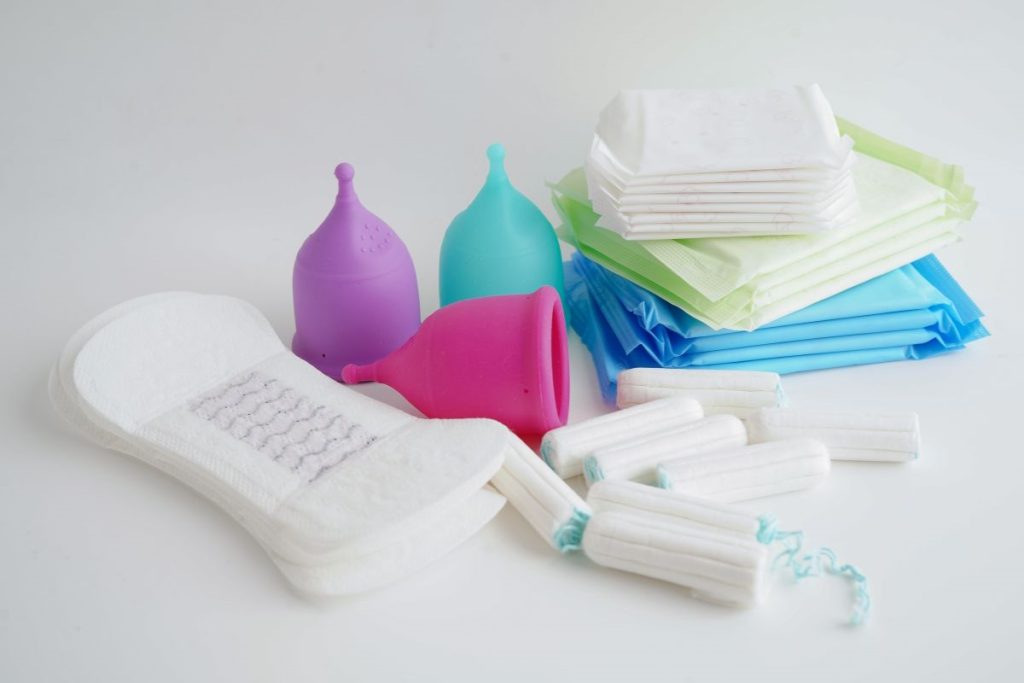
Normal menstrual flow typically lasts three to eight days and occurs every 22 to 38 days, with the menstrual cycle counted from the first day of one period to the first day of the next.
The Dangers of Doubling Up for Heavy Periods
The dangers of long-term heavy periods can also lead to anemia and other health problems. But what many women do not anticipate are the dangers of doubling up on pads and tampons. At first glance, this does not seem like a significant problem beyond the issue of spending too much money on products.
In reality, doubling up in excess is not only abnormal but also not the best idea. Why?
- You could forget one tampon is already in there — Doubling up on tampons for abnormal bleeding doubles your risk of accidentally forgetting one is up there. If you forget to take both out, this can cause a foul smell, possible fever, swelling, and itchiness. You also increase your risk of toxic shock syndrome, a rare but life-threatening condition caused by bacteria getting into the body and releasing harmful toxins.
- One tampon can get stuck — Inserting another tampon when you already have one in there can cause the original one to get pushed deeper into your vagina. While It is not going anywhere—It is not lost; it will stay put inside your vagina—that does not change the fact that it can become extremely difficult to remove.
- Pads trap moisture, which can lead to infection — Pads are meant to be a short-term solution for that time of the month, not heavy periods. Wearing one for too long or doubling up on pads leads to excess trapped moisture, which can then become a breeding ground for bacteria, yeast infections, and rashes.
Typical menstrual flow is less than 80 ml of blood per period cycle. That’s about the amount contained in a small Dixie cup. Anything more than that is considered heavy bleeding.
Could Fibroids Be the Source of My Heavy Periods?
Heavy periods can signify more severe complications, such as uterine fibroids. These are non-cancerous growths inside a woman’s uterus. They can differ in size and either stay that way or grow at different rates. Researchers estimate that 70-80% of all women develop fibroids, and most patients we see are between the ages of 35 and 54.
Some women do not experience any fibroid symptoms, but those who do complain of life-interrupting issues ranging from pelvic pain and pressure to back and leg pain, constipation, pain during sex, and yes, heavy periods and irregular menstrual bleeding. The good news is that fibroids are highly treatable, and the result can be a symptom-free life with lighter periods.
For years, the standard method of fibroid removal was surgical procedures such as hysterectomy and myomectomy. In some cases, they may still be the recommended treatment option. However, in today’s world of evolving technology, we are committed to treating fibroids and alleviating fibroid symptoms through advanced, innovative procedures such as uterine fibroid embolization (UFE), the gold standard in non-surgical fibroid treatment.
UFE is a non-invasive procedure that only takes about an hour and offers quicker recovery time than surgery (7 days for most patients). Rather than surgery, small particles are introduced into the uterine fibroid vessels, blocking the blood flow to the fibroids. This causes the fibroids to shrink and die. When performed by the board-certified interventional radiologists who specialize in UFE at Fibroid Institute Texas, many patients experience a high success rate with minimal discomfort.
UFE Advantages to Patients at Fibroid Institute
- Over 90% of patients see a dramatic improvement in symptoms
- Procedure is typically completed in under an hour
- In-office procedure instead of a hospital stay
- No incision, which means no surgical scarring
- Recovery time is often only 1 week
- Avoid side effects of pharmaceutical hormone therapies
- All fibroids may be treated at the same time
- Patients get direct access to their doctor’s mobile number
- Both in-office and virtual consultants are available
- Practice rated 4.9/5.0 out of 800+ patient reviews at multiple clinics

Experiencing Heavy Periods from Fibroids? Contact Fibroid Institute
Many women are unsure of what is normal and what is not when it comes to their menstrual cycle. As a result, they continue, unaware they are experiencing heavy periods and that something can be done. In many cases, they will double up on pads and tampons to get through another winter holiday season. If you believe this may describe you, it is a good idea to take a consultative approach with your doctor and determine the best course of action for you. There is no need to spend the holiday season, or any other season, in discomfort.
Whether UFE is the right option for you or not, our team of fibroid doctors is always on hand to partner with you and your doctor to determine the best course of action. At Fibroid Institute, we do not believe you need to decide between suffering in silence and having invasive surgery. That is why our fibroid doctors offer uterine fibroid embolization (UFE), the gold standard in non-surgical fibroid treatment.
With multiple locations, our Dallas and Houston fibroid centers help thousands of women avoid fibroid surgery and find relief from their fibroid symptoms. At Fibroid Institute, we specialize in UFE because it delivers results in the least amount of time and with limited pain. On top of that, we simplify your UFE journey, managing everything from insurance pre-authorizations to imaging orders to PCP communication and offering all patients physician-direct access before and after their procedure. Our fibroid doctors are board-certified interventional radiologists and experts passionate about helping women become #FibroidFree.
Most major medical insurance providers cover the cost of UFE. Request a free 10-15-minute phone screening to determine if you are eligible. If you qualify for UFE after the screening, you can schedule your on-site or telehealth consultation. We are dedicated to helping you become #FibroidFree. Get started now in Dallas at 214-838-6440, in Houston at 713-903-3733 or complete the form below.
This information is not a substitute for professional medical advice. Before starting any new treatment or if you have questions regarding a medical condition, always seek the advice of your doctor or other qualified health provider.
Fibroid Institute Texas serves the Dallas and Houston areas including Fort Worth, Grand Prairie, Hurst, Euless, Bedford, Arlington, Hutchins, Irving, Duncanville, DeSoto, Cedar Hill, Lancaster, Cockrell Hill, Highland Park, University Park, Park Cities, Garland, Mesquite, Richardson, Dallas, Sherman, Houston, Sugar Land, Katy, Webster, Clear Lake, The Woodlands, Universal City, Spring, Kingwood, Stafford, Conroe, Texas City, Cypress, League City, Bellaire, Addison, Carrollton, Plano, Frisco, Craig Ranch, McKinney, Allen, and more.
*Patient names and/or photos may be changed to protect patient confidentiality.
